Egyptian Revolutionary Command Council
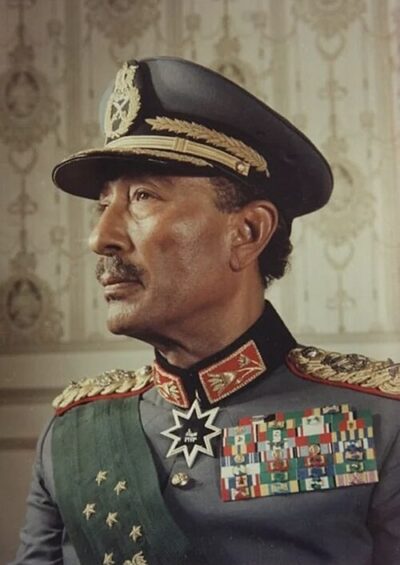
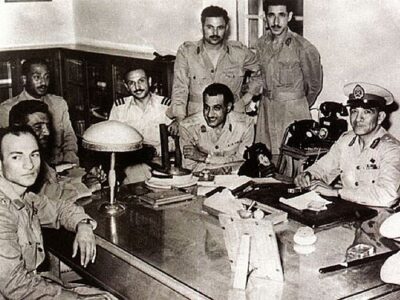
The Egyptian Revolutionary Command Council is a Council that supervised post-monarchy Egypt by the Free Officers. It was founded in 1952.
- Founded
- July 23, 1952
- Country
- Egypt
All 4 facts, and where they come from
Facts
4 facts · 0 confirmed by two sources · 0 cited · 4 from one source
Where this comes from
Papalocal keeps its own record. It started from these sources; what each one said is kept here as it was copied, so a change on their side never changes this page by itself. Tap one to read its version.
What Wikidata says · copied November 17, 2026 · revision 2553201818
- Described as
- Council that supervised post-monarchy Egypt by the Free Officers
- Other names
- Revolutionary Command Council, RCC
- What it is
- political organization
- Founded
- July 23, 1952 · 1 reference
- Ended
- June 23, 1956 · 1 reference
- Country
- Egypt · 1 reference
- Wikipedias with a page
- 8
Wikidata item Q2479116 (wikidata.org/wiki/Q2479116), public domain (CC0). Copied 2026-11-17.
What Wikipedia says · copied November 17, 2026 · revision 1375647883
The Revolutionary Command Council (RCC; Arabic: مجلس قيادة الثورة Majlis Qiyāda ath-Thawra) was the body established to supervise the Republic of Egypt and Anglo-Egyptian Sudan after the Revolution of 1952. It initially selected Ali Maher Pasha as Prime Minister, but forced him to resign after conflict over land reform. At that time, the Council took full control of Egypt. The RCC controlled the state until 1954, when the council dissolved itself.
From the Wikipedia article “Egyptian Revolutionary Command Council” (en.wikipedia.org/wiki/Egyptian_Revolutionary_Command_Council), by its contributors, under CC BY-SA 4.0 (creativecommons.org/licenses/by-sa/4.0/). Copied 2026-11-17; not changed.
Confirmed Two sources agree. Cited One source, and it names where it got it. One source One source, without a reference of its own. Sources disagree The sources disagree. We show the best-supported value and keep theirs below.
Picture: Unknown author, via Wikimedia Commons · Public domain