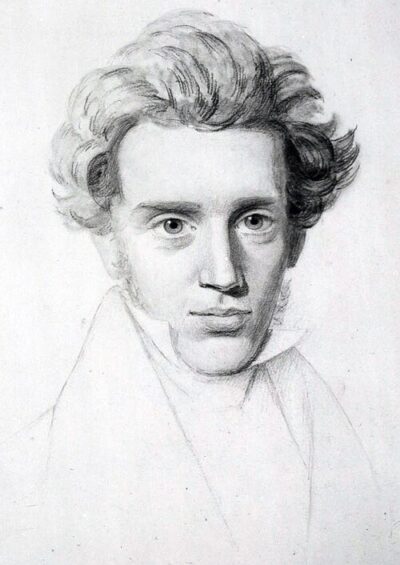
Either/Or
Either/Or is a 1st published work of S. Kierkegaard (pen name Victor Eremita) in 2 volumes in 1843; outlines a theory of human existence, marked by the distinction between a hedonistic, aesthetic mode of life and the ethical life predicated upon commitment. It was written by Søren Kierkegaard.
- Published
- 1843
- Written by
- Søren Kierkegaard
- Genre
- philosophical novel
- Country of origin
- Denmark
All 8 facts, and where they come from
Facts
8 facts · 0 confirmed by two sources · 0 cited · 8 from one source
Where this comes from
Papalocal keeps its own record. It started from these sources; what each one said is kept here as it was copied, so a change on their side never changes this page by itself. Tap one to read its version.
What Wikidata says · copied November 17, 2026 · revision 2554470967
- Described as
- 1st published work of S. Kierkegaard (pen name Victor Eremita) in 2 volumes in 1843; outlines a theory of human existence, marked by the distinction between a hedonistic, aesthetic mode of life and the ethical life predicated upon commitment
- What it is
- written work
- Written by
- Søren Kierkegaard
- Genre
- philosophical novel; essay
- Published
- 1843
- Language
- Danish
- Country of origin
- Denmark
- Followed by
- Two Upbuilding Discourses, 1843
- Wikipedias with a page
- 22
Wikidata item Q1152009 (wikidata.org/wiki/Q1152009), public domain (CC0). Copied 2026-11-17.
What Wikipedia says · copied November 17, 2026 · revision 1384224790
Either/Or (Danish: Enten – Eller) is the first published work of Danish philosopher Søren Kierkegaard. It appeared in two volumes in 1843 under the pseudonymous editorship of Victor Eremita (Latin for "victorious hermit"). It outlines a theory of human existence, marked by the distinction between an essentially hedonistic, aesthetic mode of life and the ethical life, which is predicated upon commitment.
Either/Or portrays two life views. Each life view is written and represented by a fictional author, with the prose reflecting and depending on the life view. The aesthetic life view is written in short essay form, with poetic imagery and allusions, discussing aesthetic topics such as music, seduction, drama, and beauty. The ethical life view is written as two long letters, with a more argumentative and restrained prose, discussing moral responsibility, critical reflection, and marriage. The views are expressed as experiences embodied by the fictional authors. The book's central concern is Aristotle's primal question, "How should we live?" His motto comes from Plutarch, "The deceived is wiser than one not deceived."
The aesthetic is the personal, subjective realm of existence, where an individual lives and extracts pleasure from life for its own sake. This realm offers the possibility of the highest and lowest experiences. The ethical, on the other hand, is the civic realm of existence, where value and identity are judged and at times superseded by the objective world. The choice is whether to remain oblivious to the outside world or to become involved. More specifically, the ethical realm starts with a conscious effort to choose one's life. Either way it is possible to go too far in one direction and lose sight of the self. Only faith can rescue the individual from these two opposing realms. Either/Or concludes with a brief sermon hinting at the religious sphere of existence, which consumed most of Kierkegaard's publishing career. Ultimately, his challenge is for the reader to "discover a second face hidden behind the one you see" internally, and then in others.
From the Wikipedia article “Either/Or (Kierkegaard book)” (en.wikipedia.org/wiki/Either/Or_(Kierkegaard_book)), by its contributors, under CC BY-SA 4.0 (creativecommons.org/licenses/by-sa/4.0/). Copied 2026-11-17; not changed.
Confirmed Two sources agree. Cited One source, and it names where it got it. One source One source, without a reference of its own. Sources disagree The sources disagree. We show the best-supported value and keep theirs below.
Picture: Wikimedia Commons: Kierkegaard Enten-Eller.jpg · See Commons file page