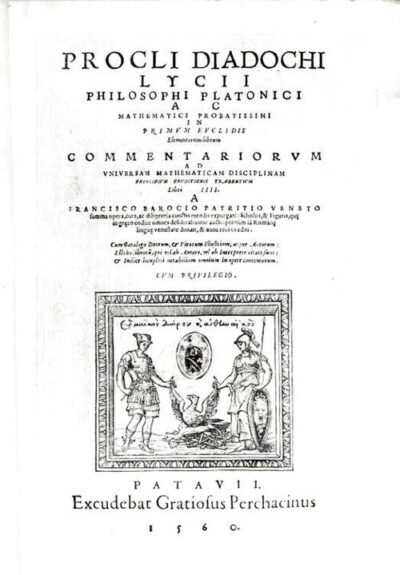
Elements of theology
Elements of theology is a work by Proclus.
- Written by
- Proclus
All 4 facts, and where they come from
Facts
4 facts · 0 confirmed by two sources · 0 cited · 4 from one source
Where this comes from
Papalocal keeps its own record. It started from these sources; what each one said is kept here as it was copied, so a change on their side never changes this page by itself. Tap one to read its version.
What Wikidata says · copied November 17, 2026 · revision 2475920513
- Described as
- work by Proclus
- Other names
- Elements of Theology
- What it is
- literary work
- Written by
- Proclus
- Language
- Ancient Greek; Koine Greek
- Wikipedias with a page
- 6
Wikidata item Q28008153 (wikidata.org/wiki/Q28008153), public domain (CC0). Copied 2026-11-17.
What Wikipedia says · copied November 17, 2026 · revision 1385983934
The Elements of Theology (Ancient Greek: Στοιχείωσις θεολογική, romanized: Stoicheiōses Theologikē) is a work on Neoplatonic philosophy written by Proclus (c. 412–485). Conceived of as a systematic summary of Neoplatonic metaphysics, it has often served as a general introduction to this subject.
It was widely influential during the Middle Ages, especially through its 9th-century Arabic adaptation Kitāb al-Īḍāḥ fī al-khayr al-maḥḍ ("The Book on the Explanation of the Pure Good"), known in Latin as Liber de causis or "Book of Causes", which was falsely attributed to Aristotle. Proclus' work itself was first translated into Latin in 1268 by William of Moerbeke as Elementatio Theologica.
From the Wikipedia article “Elements of Theology” (en.wikipedia.org/wiki/Elements_of_Theology), by its contributors, under CC BY-SA 4.0 (creativecommons.org/licenses/by-sa/4.0/). Copied 2026-11-17; not changed.
Confirmed Two sources agree. Cited One source, and it names where it got it. One source One source, without a reference of its own. Sources disagree The sources disagree. We show the best-supported value and keep theirs below.