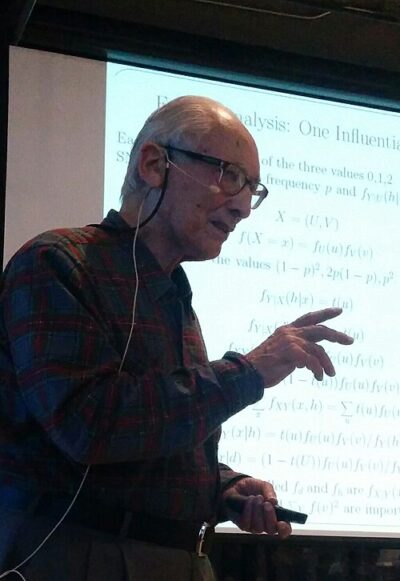
Emanuel and Carol Parzen Prize for Statistical Innovation
Emanuel and Carol Parzen Prize for Statistical Innovation is a Statistical award. It was created in 1994. It is given by the Texas A&M University Department of Statistics.
- Given by
- Texas A&M University Department of Statistics
- Country
- United States
- Field
- statistics
- Created
- 1994
All 7 facts, and where they come from
Facts
7 facts · 0 confirmed by two sources · 0 cited · 7 from one source
Where this comes from
Papalocal keeps its own record. It started from these sources; what each one said is kept here as it was copied, so a change on their side never changes this page by itself. Tap one to read its version.
What Wikidata says · copied November 19, 2026 · revision 2518497702
- Described as
- Statistical award
- Other names
- Parzen Prize
- What it is
- science award; statistics award
- Created
- 1994
- Country
- United States
- Given by
- Texas A&M University Department of Statistics
- Field
- statistics
- Named after
- Emanuel Parzen
- Wikipedias with a page
- 4
Wikidata item Q47558902 (wikidata.org/wiki/Q47558902), public domain (CC0). Copied 2026-11-19.
What Wikipedia says · copied November 19, 2026 · revision 1341322340
The Emanuel and Carol Parzen Prize for Statistical Innovation, known in brief as the Parzen Prize, is awarded biennially by the Department of Statistics at Texas A&M University to North American mathematicians to recognize their outstanding and influential contributions to the development of statistical methods and that the winners received their PhD at least 25 years prior to the award. It is named after the mathematician and statistician Emanuel Parzen (1929–2016).
The award consists of $1,000 and travel expenses to College Station, Texas, where the winner speaks at the award ceremony.
From the Wikipedia article “Parzen Prize” (en.wikipedia.org/wiki/Parzen_Prize), by its contributors, under CC BY-SA 4.0 (creativecommons.org/licenses/by-sa/4.0/). Copied 2026-11-19; not changed.
Confirmed Two sources agree. Cited One source, and it names where it got it. One source One source, without a reference of its own. Sources disagree The sources disagree. We show the best-supported value and keep theirs below.