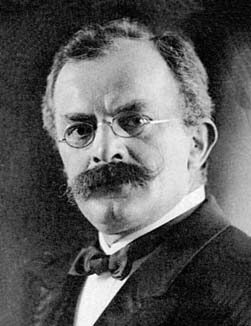
Engel's theorem
Engel's theorem is a theorem in Lie representation theory.
All 1 facts, and where they come from
Facts
1 facts · 0 confirmed by two sources · 0 cited · 1 from one source
Where this comes from
Papalocal keeps its own record. It started from these sources; what each one said is kept here as it was copied, so a change on their side never changes this page by itself. Tap one to read its version.
What Wikidata says · copied November 18, 2026 · revision 2504064076
- Described as
- theorem in Lie representation theory
- What it is
- theorem
- Wikipedias with a page
- 10
Wikidata item Q3527069 (wikidata.org/wiki/Q3527069), public domain (CC0). Copied 2026-11-18.
What Wikipedia says · copied November 18, 2026 · revision 1383365530
In representation theory, a branch of mathematics, Engel's theorem states that a finite-dimensional Lie algebra 𝔤 is a nilpotent Lie algebra if and only if for each X∈𝔤, the adjoint map
ad(X):𝔤→𝔤,
given by ad(X)(Y)=[X,Y], is a nilpotent endomorphism on 𝔤; i.e., ad(X)k=0 for some k. It is a consequence of the theorem, also called Engel's theorem, which says that if a Lie algebra of matrices consists of nilpotent matrices, then the matrices can all be simultaneously brought to a strictly upper triangular form. Note that if we merely have a Lie algebra of matrices which is nilpotent as a Lie algebra, then this conclusion does not follow (i.e. the naïve replacement in Lie's theorem of "solvable" with "nilpotent", and "upper triangular" with "strictly upper triangular", is false; this already fails for the one-dimensional Lie subalgebra of scalar matrices).
The theorem is named after the mathematician Friedrich Engel, who sketched a proof of it in a letter to Wilhelm Killing dated 20 July 1890 (Hawkins 2000, p. 176). Engel's student K.A. Umlauf gave a complete proof in his 1891 dissertation, reprinted as (Umlauf 2010).
From the Wikipedia article “Engel's theorem” (en.wikipedia.org/wiki/Engel's_theorem), by its contributors, under CC BY-SA 4.0 (creativecommons.org/licenses/by-sa/4.0/). Copied 2026-11-18; not changed.
Confirmed Two sources agree. Cited One source, and it names where it got it. One source One source, without a reference of its own. Sources disagree The sources disagree. We show the best-supported value and keep theirs below.