

ENIAC
ENIAC is the first electronic general-purpose computer.
All 5 facts, and where they come from
Facts
5 facts · 0 confirmed by two sources · 1 cited · 4 from one source
Where this comes from
Papalocal keeps its own record. It started from these sources; what each one said is kept here as it was copied, so a change on their side never changes this page by itself. Tap one to read its version.
What Wikidata says · copied November 16, 2026 · revision 2563096344
- Described as
- First electronic general-purpose computer
- Other names
- Electronic Numerical Integrator And Computer
- What it is
- one-of-a-kind computer; decimal computer; first-generation computer · 1 reference
- Followed by
- UNIVAC I
- Country
- United States
- Wikipedias with a page
- 75
Wikidata item Q169399 (wikidata.org/wiki/Q169399), public domain (CC0). Copied 2026-11-16.
What Wikipedia says · copied November 16, 2026 · revision 1384022162
ENIAC (; Electronic Numerical Integrator and Computer) was the first programmable, electronic, general-purpose digital computer, completed in 1945. Other computers had some of these features, but ENIAC was the first to have them all. ENIAC was Turing-complete and able to solve "a large class of numerical problems" through reprogramming.
ENIAC was designed by Ursinus College physics professor John Mauchly and J. Presper Eckert of the University of Pennsylvania to calculate artillery firing tables for the United States Army's Ballistic Research Laboratory (which later became a part of the Army Research Laboratory). However, its first program was a study of the feasibility of the thermonuclear weapon.
ENIAC was completed in 1945 and first put to work for practical purposes on December 10, 1945.
ENIAC was formally dedicated at the University of Pennsylvania on February 15, 1946, having cost $487,000 (equivalent to $7,200,000 in 2025), and called a "Giant Brain" by the press. It had a speed on the order of one thousand times faster than that of electro-mechanical machines.
ENIAC was formally accepted by the U.S. Army Ordnance Corps in July 1946. It was transferred to Aberdeen Proving Ground in Aberdeen, Maryland, in 1947, where it was in continuous operation until 1955.
From the Wikipedia article “ENIAC” (en.wikipedia.org/wiki/ENIAC), by its contributors, under CC BY-SA 4.0 (creativecommons.org/licenses/by-sa/4.0/). Copied 2026-11-16; not changed.
Confirmed Two sources agree. Cited One source, and it names where it got it. One source One source, without a reference of its own. Sources disagree The sources disagree. We show the best-supported value and keep theirs below.
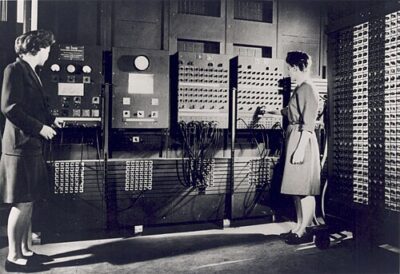
Picture: Wikimedia Commons: Two women operating ENIAC (full resolution).jpg · See Commons file page
People connected 6
Known for it
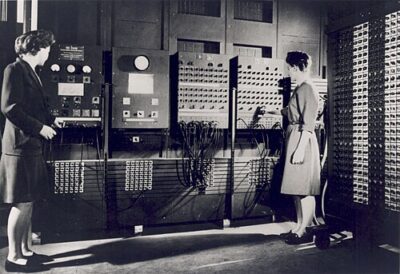 Jean BartikAmerican ENIAC computer programmer (1924–2011)
 Kathleen AntonelliIrish computer programmer (1921-2006)
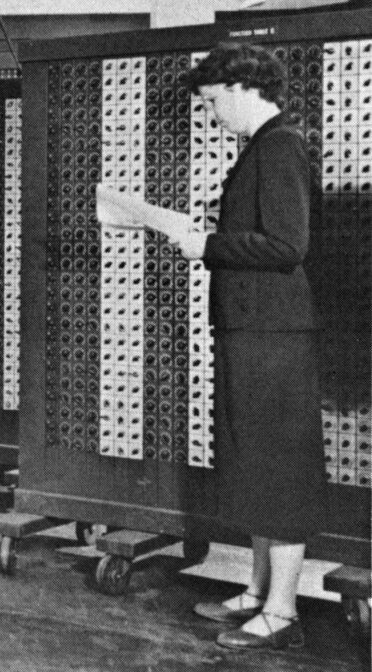 Betty HolbertonAmerican computer programmer (1917–2001)
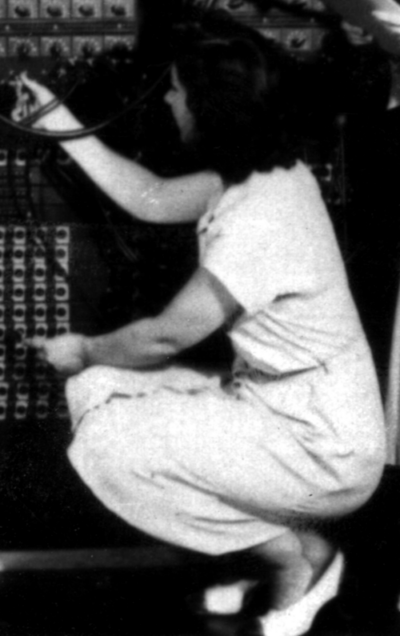 Ruth TeitelbaumAmerican computer programmer and mathematician
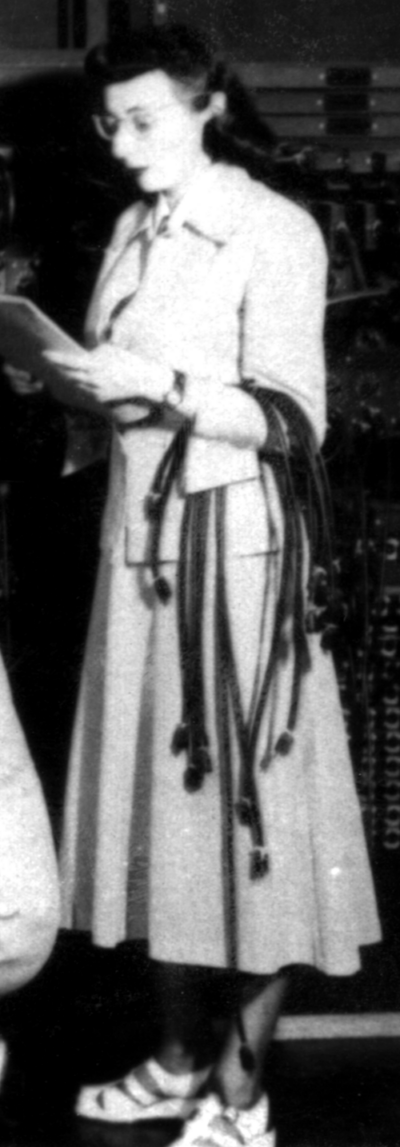 Marlyn Meltzerprogrammer for the ENIAC computer
 Frances SpenceAmerican physicist and computer scientist
