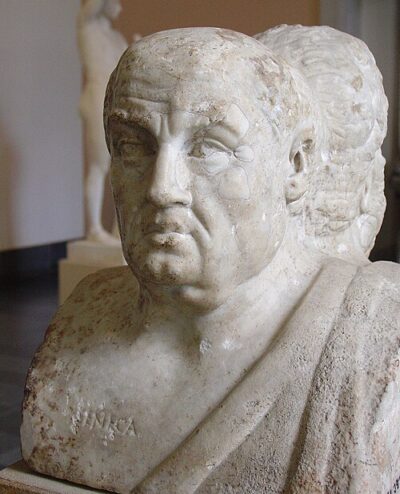
Epistulae morales ad Lucilium
Epistulae morales ad Lucilium is a collection of letters by Seneca.
- Written by
- Seneca
- Genre
- epistolary fiction
- Country of origin
- Ancient Rome
All 6 facts, and where they come from
Facts
6 facts · 0 confirmed by two sources · 2 cited · 4 from one source
Where this comes from
Papalocal keeps its own record. It started from these sources; what each one said is kept here as it was copied, so a change on their side never changes this page by itself. Tap one to read its version.
What Wikidata says · copied November 17, 2026 · revision 2533112141
- Described as
- collection of letters by Seneca
- Other names
- Moral Letters to Lucilius, Seneca's Morals, Sen. Ep.
- What it is
- literary work
- Written by
- Seneca · 1 reference
- Genre
- epistolary fiction; essay · 1 reference
- Language
- Latin · 1 reference
- Country of origin
- Ancient Rome · 1 reference
- Wikipedias with a page
- 26
Wikidata item Q720535 (wikidata.org/wiki/Q720535), public domain (CC0). Copied 2026-11-17.
What Wikipedia says · copied November 17, 2026 · revision 1384253481
Epistulae Morales ad Lucilium (Latin for "Moral Letters to Lucilius"), also known as the Moral Epistles and Letters from a Stoic, is a letter collection of 124 extant letters that Seneca the Younger wrote at the end of his life, during his retirement, after he had worked for the Emperor Nero for more than ten years. They are addressed to Lucilius Junior, the then procurator of Sicily, who is known only through Seneca's writings.
The letters often begin with an observation on daily life, and then proceed to an issue or principle abstracted from that observation. The result is like a diary, or handbook of philosophical meditations. The letters focus on many traditional themes of Stoic philosophy such as the contempt of death, the stout-heartedness of the sage, and virtue as the supreme good.
From the Wikipedia article “Epistulae Morales ad Lucilium” (en.wikipedia.org/wiki/Epistulae_Morales_ad_Lucilium), by its contributors, under CC BY-SA 4.0 (creativecommons.org/licenses/by-sa/4.0/). Copied 2026-11-17; not changed.
Confirmed Two sources agree. Cited One source, and it names where it got it. One source One source, without a reference of its own. Sources disagree The sources disagree. We show the best-supported value and keep theirs below.
Picture: Wikimedia Commons: Seneca the Younger, Letters, Florence, Plut. 45.33.jpg · See Commons file page