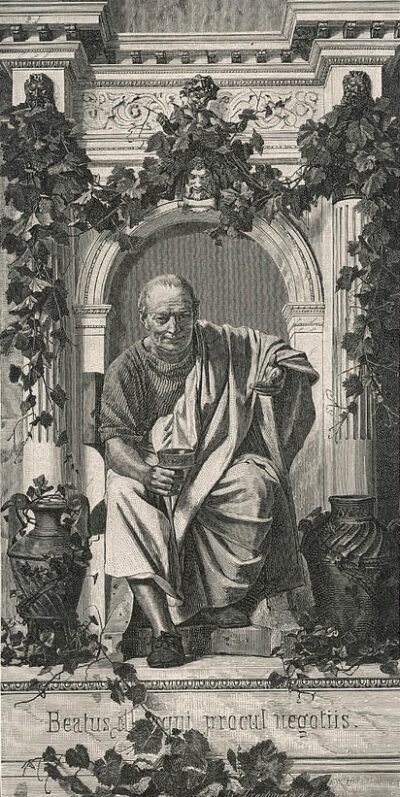
Epodes
Epodes is a work by Horace.
- Published
- 30s BC
- Written by
- Horace
- Genre
- poetry
- Country of origin
- Ancient Rome
All 6 facts, and where they come from
Facts
6 facts · 0 confirmed by two sources · 0 cited · 6 from one source
Where this comes from
Papalocal keeps its own record. It started from these sources; what each one said is kept here as it was copied, so a change on their side never changes this page by itself. Tap one to read its version.
What Wikidata says · copied November 17, 2026 · revision 2396713050
- Described as
- work by Horace
- Other names
- Hor. Epod.
- What it is
- literary work
- Written by
- Horace
- Genre
- poetry · 1 reference
- Published
- 30s BC
- Language
- Latin
- Country of origin
- Ancient Rome
- Wikipedias with a page
- 15
Wikidata item Q3730710 (wikidata.org/wiki/Q3730710), public domain (CC0). Copied 2026-11-17.
What Wikipedia says · copied November 17, 2026 · revision 1384740565
The Epodes (Latin: Epodi or Epodon liber; also called Iambi) are a collection of iambic poems written by the Roman poet Horace. They were published in 30 BC and form part of his early work alongside the Satires. Following the model of the Greek poets Archilochus and Hipponax, the Epodes largely fall into the genre of blame poetry, which seeks to discredit and humiliate its targets.
The 17 poems of the Epodes cover a variety of topics, including politics, magic, eroticism and food. A product of the turbulent final years of the Roman Republic, the collection is known for its striking depiction of Rome's socio-political ills in a time of great upheaval. Due to their recurring coarseness and explicit treatment of sexuality, the Epodes have traditionally been Horace's least regarded work. However, the last quarter of the 20th century saw a resurgence in scholarly interest in the collection.
From the Wikipedia article “Epodes (Horace)” (en.wikipedia.org/wiki/Epodes_(Horace)), by its contributors, under CC BY-SA 4.0 (creativecommons.org/licenses/by-sa/4.0/). Copied 2026-11-17; not changed.
Confirmed Two sources agree. Cited One source, and it names where it got it. One source One source, without a reference of its own. Sources disagree The sources disagree. We show the best-supported value and keep theirs below.
Picture: Wikimedia Commons: Horace Epodes III (Harley MS 3534 f.39v British Library).jpg · See Commons file page