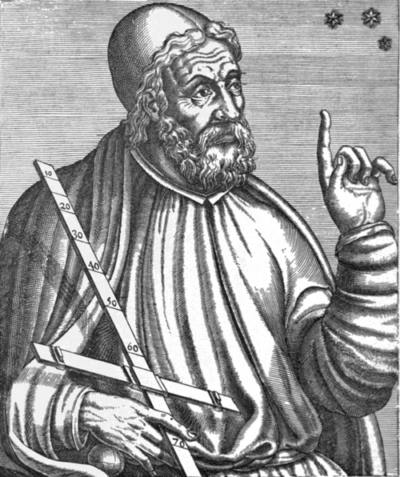
equant
Equant is an outdated measure of planetary orbits.
All 1 facts, and where they come from
Facts
1 facts · 0 confirmed by two sources · 0 cited · 1 from one source
Where this comes from
Papalocal keeps its own record. It started from these sources; what each one said is kept here as it was copied, so a change on their side never changes this page by itself. Tap one to read its version.
What Wikidata says · copied November 17, 2026 · revision 2513888355
- Described as
- outdated measure of planetary orbits
- What it is
- mathematical concept
- Wikipedias with a page
- 13
Wikidata item Q1965418 (wikidata.org/wiki/Q1965418), public domain (CC0). Copied 2026-11-17.
What Wikipedia says · copied November 17, 2026 · revision 1368595242
Equant (or punctum aequans) is a mathematical concept developed by Claudius Ptolemy in the 2nd century AD to account for the observed motion of the planets. The equant is used to explain the observed speed change in different stages of the planetary orbit. This planetary concept allowed Ptolemy to keep the theory of uniform circular motion alive by stating that the path of heavenly bodies was uniform around one point and circular around another point.
Ptolemy does not have a word for the equant – he used expressions such as "the eccentre producing the mean motion".
From the Wikipedia article “Equant” (en.wikipedia.org/wiki/Equant), by its contributors, under CC BY-SA 4.0 (creativecommons.org/licenses/by-sa/4.0/). Copied 2026-11-17; not changed.
Confirmed Two sources agree. Cited One source, and it names where it got it. One source One source, without a reference of its own. Sources disagree The sources disagree. We show the best-supported value and keep theirs below.