Erlangen program
Erlangen program is a research program on the symmetries of geometry.
All 1 facts, and where they come from
Facts
1 facts · 0 confirmed by two sources · 0 cited · 1 from one source
Where this comes from
Papalocal keeps its own record. It started from these sources; what each one said is kept here as it was copied, so a change on their side never changes this page by itself. Tap one to read its version.
What Wikidata says · copied November 17, 2026 · revision 2515860106
- Described as
- research program on the symmetries of geometry
- What it is
- research
- Wikipedias with a page
- 22
Wikidata item Q315296 (wikidata.org/wiki/Q315296), public domain (CC0). Copied 2026-11-17.
What Wikipedia says · copied November 17, 2026 · revision 1371079108
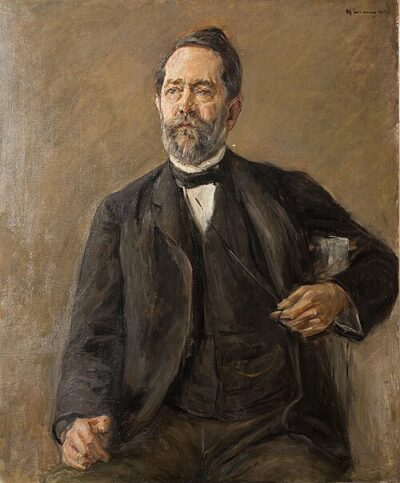
In mathematics, the Erlangen program is a method of characterizing geometries based on group theory and projective geometry. It was published by Felix Klein in 1872 as Vergleichende Betrachtungen über neuere geometrische Forschungen. It is named after the University Erlangen-Nürnberg, where Klein worked.
By 1872, non-Euclidean geometries had emerged, but without a way to determine their hierarchy and relationships. Klein's method was fundamentally innovative in three ways:Projective geometry was emphasized as the unifying frame for all other geometries considered by him. In particular, Euclidean geometry was more restrictive than affine geometry, which in turn is more restrictive than projective geometry.
Klein proposed that group theory, a branch of mathematics that uses algebraic methods to abstract the idea of symmetry, was the most useful way of organizing geometrical knowledge; at the time it had already been introduced into the theory of equations in the form of Galois theory.
Klein made much more explicit the idea that each geometrical language had its own, appropriate concepts, thus for example projective geometry rightly talked about conic sections, but not about circles or angles because those notions were not invariant under projective transformations (something familiar in geometrical perspective). The way the multiple languages of geometry then came back together could be explained by the way subgroups of a symmetry group related to each other.
Later, Élie Cartan generalized Klein's homogeneous model spaces to Cartan connections on certain principal bundles, which generalized Riemannian geometry.
From the Wikipedia article “Erlangen program” (en.wikipedia.org/wiki/Erlangen_program), by its contributors, under CC BY-SA 4.0 (creativecommons.org/licenses/by-sa/4.0/). Copied 2026-11-17; not changed.
Confirmed Two sources agree. Cited One source, and it names where it got it. One source One source, without a reference of its own. Sources disagree The sources disagree. We show the best-supported value and keep theirs below.