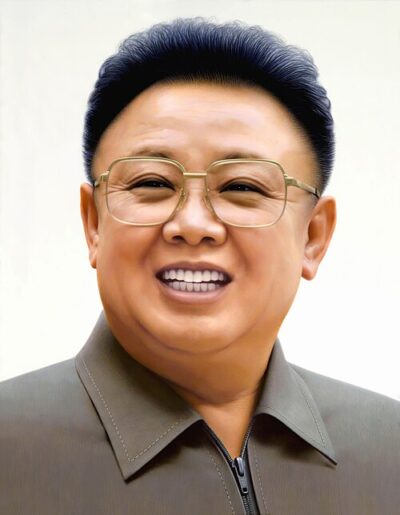
Eternal leaders of North Korea
Eternal leaders of North Korea is a title given to Kim Il Sung and Kim Jong Il posthumously. It was created in 1998.
- Country
- North Korea
- Created
- September 5, 1998
All 4 facts, and where they come from
Facts
4 facts · 0 confirmed by two sources · 0 cited · 4 from one source
Where this comes from
Papalocal keeps its own record. It started from these sources; what each one said is kept here as it was copied, so a change on their side never changes this page by itself. Tap one to read its version.
What Wikidata says · copied November 17, 2026 · revision 2568920095
- Described as
- title given to Kim Il Sung and Kim Jong Il posthumously
- What it is
- position; posthumous name
- Created
- September 5, 1998
- Country
- North Korea
- Wikipedias with a page
- 29
Wikidata item Q468325 (wikidata.org/wiki/Q468325), public domain (CC0). Copied 2026-11-17.
What Wikipedia says · copied November 17, 2026 · revision 1378470738
The eternal leaders of North Korea or eternal leaders of Korea (officially the eternal leaders of Juche Korea) are honorary titles that are posthumously bestowed upon deceased leaders of North Korea. The phrase was used in a line of the preamble to the Constitution, as amended on June 30, 2016, and in subsequent revisions.
It reads (in the original version):Under the leadership of the Workers' Party of Korea, the Democratic People's Republic of Korea and the Korean people will uphold the Great Leader Comrade Kim Il Sung as the eternal President of the Democratic People's Republic of Korea and Comrade Kim Jong Il as the eternal Chairman of the National Defence Commission of the Democratic People's Republic of Korea [...]
From the Wikipedia article “Eternal leaders of North Korea” (en.wikipedia.org/wiki/Eternal_leaders_of_North_Korea), by its contributors, under CC BY-SA 4.0 (creativecommons.org/licenses/by-sa/4.0/). Copied 2026-11-17; not changed.
Confirmed Two sources agree. Cited One source, and it names where it got it. One source One source, without a reference of its own. Sources disagree The sources disagree. We show the best-supported value and keep theirs below.