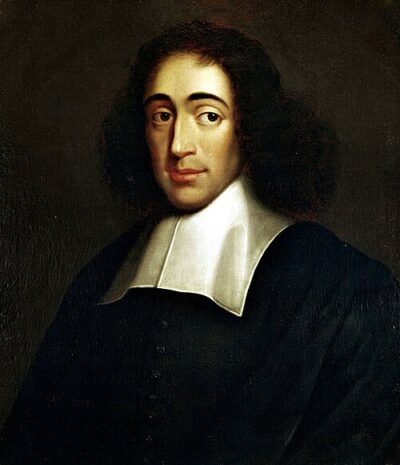
Ethics
Ethics is a philosophical treatise written by Benedictus de Spinoza. It came out in 1677.
- Published
- 1677
- Written by
- Benedictus de Spinoza
- Genre
- discourse
All 7 facts, and where they come from
Facts
7 facts · 0 confirmed by two sources · 1 cited · 6 from one source
Where this comes from
Papalocal keeps its own record. It started from these sources; what each one said is kept here as it was copied, so a change on their side never changes this page by itself. Tap one to read its version.
What Wikidata says · copied November 17, 2026 · revision 2553465400
- Described as
- philosophical treatise written by Benedictus de Spinoza
- Other names
- Ethics, Demonstrated in Geometrical Order, Ethica, Ethica in Ordine Geometrico Demonstrata, Ethica ordine geometrico demonstrata
- What it is
- posthumous work; literary work
- Written by
- Benedictus de Spinoza
- Genre
- discourse · 1 reference
- Published
- 1677
- Language
- Neo-Latin; Latin · 1 reference
- Wikipedias with a page
- 43
Wikidata item Q862816 (wikidata.org/wiki/Q862816), public domain (CC0). Copied 2026-11-17.
What Wikipedia says · copied November 17, 2026 · revision 1384746713
Ethics, Demonstrated in Geometrical Order (Latin: Ethica, ordine geometrico demonstrata) is a philosophical treatise written in Latin by Baruch Spinoza (Benedictus de Spinoza). It was written between 1661 and 1675 and was first published posthumously in 1677.
The Ethics is perhaps the most ambitious attempt to apply Euclid's method in philosophy, which was referred to as “more geometrico” which in Latin meant “in a geometrical manner”. Spinoza puts forward a small number of definitions and axioms from which he attempts to derive hundreds of propositions and corollaries, such as "when the Mind imagines its own lack of power, it is saddened by it", "a free man thinks of nothing less than of death", and "the human Mind cannot be absolutely destroyed with the Body, but something of it remains which is eternal."
From the Wikipedia article “Spinoza's Ethics” (en.wikipedia.org/wiki/Spinoza's_Ethics), by its contributors, under CC BY-SA 4.0 (creativecommons.org/licenses/by-sa/4.0/). Copied 2026-11-17; not changed.
Confirmed Two sources agree. Cited One source, and it names where it got it. One source One source, without a reference of its own. Sources disagree The sources disagree. We show the best-supported value and keep theirs below.
Picture: Wikimedia Commons: Spinoza Ethica.jpg · See Commons file page