Euler–Maclaurin formula
Euler–Maclaurin formula is a formula.
All 4 facts, and where they come from
Facts
4 facts · 0 confirmed by two sources · 0 cited · 4 from one source
Where this comes from
Papalocal keeps its own record. It started from these sources; what each one said is kept here as it was copied, so a change on their side never changes this page by itself. Tap one to read its version.
What Wikidata says · copied November 17, 2026 · revision 2517410754
- Described as
- theorem
- What it is
- formula; theorem
- Named after
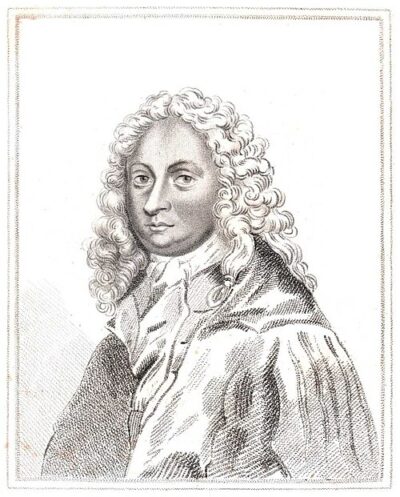
- Leonhard Euler; Colin MacLaurin
- Wikipedias with a page
- 23
Wikidata item Q282023 (wikidata.org/wiki/Q282023), public domain (CC0). Copied 2026-11-17.
What Wikipedia says · copied November 17, 2026 · revision 1377261850
In mathematics, the Euler–Maclaurin formula is a formula for the difference between an integral and a closely related sum. It can be used to approximate integrals by finite sums, or conversely to evaluate finite sums and infinite series using integrals and the machinery of calculus. For example, many asymptotic expansions are derived from the formula. Faulhaber's formula for the sum of powers is an immediate consequence.
The formula was discovered independently by Leonhard Euler and Colin Maclaurin around 1735. Euler needed it to compute slowly converging infinite series while Maclaurin used it to calculate integrals. It was later generalized to Darboux's formula.
From the Wikipedia article “Euler–Maclaurin formula” (en.wikipedia.org/wiki/Euler–Maclaurin_formula), by its contributors, under CC BY-SA 4.0 (creativecommons.org/licenses/by-sa/4.0/). Copied 2026-11-17; not changed.
Confirmed Two sources agree. Cited One source, and it names where it got it. One source One source, without a reference of its own. Sources disagree The sources disagree. We show the best-supported value and keep theirs below.