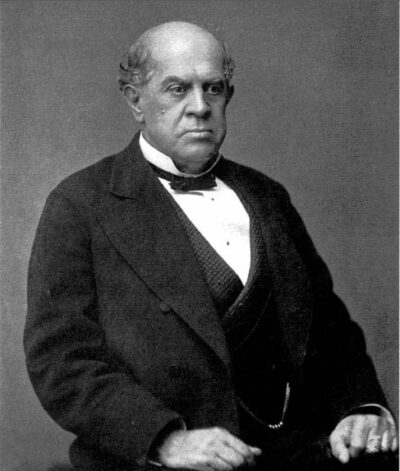
Facundo
Facundo is a novel by Domingo Faustino Sarmiento. It came out in 1845.
- Published
- 1845
- Written by
- Domingo Faustino Sarmiento
- Genre
- biography
All 6 facts, and where they come from
Facts
6 facts · 0 confirmed by two sources · 0 cited · 6 from one source
Where this comes from
Papalocal keeps its own record. It started from these sources; what each one said is kept here as it was copied, so a change on their side never changes this page by itself. Tap one to read its version.
What Wikidata says · copied November 17, 2026 · revision 2555082282
- Described as
- novel by Domingo Faustino Sarmiento
- What it is
- literary work
- Written by
- Domingo Faustino Sarmiento · 1 reference
- Genre
- biography; essay
- Published
- 1845
- Language
- Spanish
- Wikipedias with a page
- 12
Wikidata item Q807736 (wikidata.org/wiki/Q807736), public domain (CC0). Copied 2026-11-17.
What Wikipedia says · copied November 17, 2026 · revision 1384237605
Civilization and Barbarism: Life of Juan Facundo Quiroga (original Spanish title in Bello orthography: Civilización i Barbarie: Vida de Juan Facundo Qiroga), later published and better known as Facundo, is a book written in 1845 by Domingo Faustino Sarmiento, a writer and journalist who became the seventh president of Argentina. It is a cornerstone of Latin American literature: a work of creative non-fiction that helped to define the parameters for thinking about the region's development, modernization, power, and culture. Subtitled Civilization and Barbarism, Facundo contrasts civilization and barbarism as seen in early 19th-century Argentina. Literary critic Roberto González Echevarría calls the work "the most important book written by a Latin American in any discipline or genre".
Facundo describes the life of Juan Facundo Quiroga, a caudillo who had terrorized provincial Argentina in the 1820s and 1830s. Kathleen Ross, one of Facundo's English translators, points out that the author also published Facundo to "denounce the tyranny of the Argentine dictator Juan Manuel de Rosas". Juan Manuel de Rosas ruled Argentina from 1829 to 1832 and again from 1835 to 1852; it was because of Rosas that Sarmiento was in exile in Chile, where he wrote the book. Sarmiento sees Rosas as heir to Facundo: both are caudillos and representatives of a barbarism that derives from the nature of the Argentine countryside. As Ross explains, Sarmiento's book is therefore engaged in describing the "Argentine national character, explaining the effects of Argentina's geographical conditions on personality, the 'barbaric' nature of the countryside versus the 'civilizing' influence of the city, and the great future awaiting Argentina when it opened its doors wide to European immigration".
Throughout the text, Sarmiento explores the dichotomy between civilization and barbarism. As Kimberly Ball observes, "civilization is identified with northern Europe, North America, cities, Unitarians, Paz, and Rivadavia", while "barbarism is identified with Latin America, Spain, Asia, the Middle East, the countryside, Federalists, Facundo, and Rosas". It is in the way that Facundo articulates this opposition that Sarmiento's book has had such a profound influence. In the words of González Echevarría: "in proposing the dialectic between civilization and barbarism as the central conflict in Latin American culture Facundo gave shape to a polemic that began in the colonial period and continues to the present day".
The first edition of Facundo was published in installments in 1845. Sarmiento removed the last two chapters of the second edition (1851), but restored them in the 1874 edition, deciding that they were important to the book's development.
The first translation into English, by Mary Tyler Peabody Mann, was published in 1868. A modern and complete translation by Kathleen Ross appeared in 2003 from the University of California Press.
From the Wikipedia article “Facundo” (en.wikipedia.org/wiki/Facundo), by its contributors, under CC BY-SA 4.0 (creativecommons.org/licenses/by-sa/4.0/). Copied 2026-11-17; not changed.
Confirmed Two sources agree. Cited One source, and it names where it got it. One source One source, without a reference of its own. Sources disagree The sources disagree. We show the best-supported value and keep theirs below.
Picture: Wikimedia Commons: Facundo.jpg · See Commons file page