
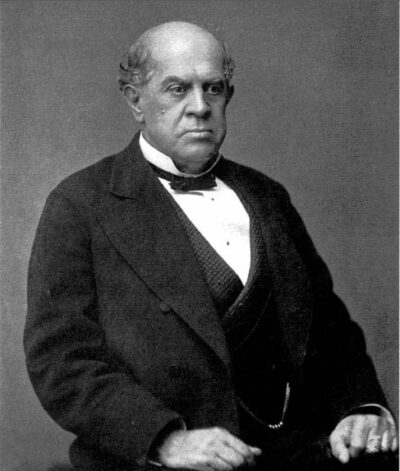
Domingo Faustino Sarmiento
Domingo Faustino Sarmiento was an Argentinian politician and writer. Born February 15, 1811, in San Juan. Died September 11, 1888, in Asunción. Positions held include President of Argentina (1868–1874), member of the Argentine Chamber of Senators (1875–1879) and ambassador of Argentina to Chile. Known for Facundo, Recuerdos de Provincia and Vida de Dominguito.
Facts
32 facts · 2 confirmed by two sources · 10 cited · 20 from one source
Where this comes from
Papalocal keeps its own record. It started from these sources; what each one said is kept here as it was copied, so a change on their side never changes this page by itself. Tap one to read its version.
What Wikidata says · copied November 16, 2026 · revision 2559292113
- Described as
- Argentinian politician and writer (1811-1888)
- Born
- February 15, 1811 · 6 references
- Died
- September 11, 1888 · 9 references
- Born in
- San Juan · 1 reference
- Died in
- Asunción · 1 reference
- Buried in
- Recoleta Cemetery
- Cause of death
- congestive heart failure
- Citizen of
- Argentina
- Occupation
- politician · 1 reference; writer · 2 references; journalist; military personnel; diplomat; historian
- Positions held
- President of Argentina (1868–1874) · 1 reference; member of the Argentine Chamber of Senators (1875–1879) · 1 reference; ambassador of Argentina to Chile; ambassador of Argentina to the United States (1863–1868) · 1 reference; Governor of San Juan province (1862–1864) · 1 reference
- Political party
- Unitarian Party · 1 reference
- Member of
- Freemasonry · 1 reference
- Known for
- Facundo; Recuerdos de Provincia; Vida de Dominguito; Campaña en el Ejército Grande
- Spouse
- Benita Martínez Pastoriza · 2 references
- Children
- Ana Faustina Sarmiento; Dominguito Fidel Sarmiento
- Mother
- Paula Albarracín · 3 references
- Siblings
- Bienvenida Sarmiento; Procesa del Carmen Sarmiento
- Military branch
- National Army of Colombia · 1 reference
- Military rank
- divisional general
- Wikipedias with a page
- 53
Wikidata item Q254041 (wikidata.org/wiki/Q254041), public domain (CC0). Copied November 16, 2026.
What Wikipedia says · copied November 16, 2026 · revision 1381327335
Domingo Faustino Sarmiento (15 February 1811 – 11 September 1888) was President of Argentina from 1868 to 1874. He was a member of a group of intellectuals, known as the Generation of 1837, who had a great influence on 19th-century Argentina.
Sarmiento grew up in a poor but politically active family that paved the way for many of his future accomplishments. Between 1843 and 1850, he was frequently in exile, and wrote in both Chile and in Argentina. His most famous work was Facundo, a critique of Juan Manuel de Rosas, that Sarmiento wrote while working for the newspaper El Progreso during his exile in Chile. The book brought him far more than just literary recognition; he expended his efforts and energy on the war against dictatorships, specifically that of Rosas, and contrasted enlightened Europe—a world where, in his eyes, democracy, social services, and intelligent thought were valued—with the barbarism of the gaucho and especially the caudillo, the ruthless strongmen of 19th-century Argentina.
As president, Sarmiento championed intelligent thought—including education for children and women—and democracy for Latin America. He also modernized and developed train systems, a postal system, and a comprehensive education system. He spent many years in ministerial roles on the federal and state levels where he travelled abroad and examined other education systems.
Sarmiento died in Asunción, Paraguay, at the age of 77 from a heart attack. He was buried in Buenos Aires. Today, he is respected as a political innovator and writer. Miguel de Unamuno considered him among the greatest writers of Castilian prose.
- Born, in its opening lines
- February 15, 1811
- Died, in its opening lines
- September 11, 1888
From the Wikipedia article “Domingo Faustino Sarmiento” (en.wikipedia.org/wiki/Domingo_Faustino_Sarmiento), by its contributors, under CC BY-SA 4.0 (creativecommons.org/licenses/by-sa/4.0/). Copied November 16, 2026; not changed.
Confirmed Two sources agree. Cited One source, and it names where it got it. One source One source, without a reference of its own. Sources disagree The sources disagree. We show the best-supported value and keep theirs below.
