
Falange Española Tradicionalista y de las JONS
Falange Española Tradicionalista y de las JONS is a ruling political party in Francoist Spain (1937–1977). Its headquarters are in Madrid. It stands for national syndicalism, fascism and Francoism.
- Country
- Spain
- Founded
- April 19, 1937
- Ideology
- national syndicalism
All 10 facts, and where they come from
Facts
10 facts · 0 confirmed by two sources · 6 cited · 4 from one source
Where this comes from
Papalocal keeps its own record. It started from these sources; what each one said is kept here as it was copied, so a change on their side never changes this page by itself. Tap one to read its version.
What Wikidata says · copied November 17, 2026 · revision 2555265792
- Described as
- ruling political party in Francoist Spain (1937–1977)
- Other names
- Traditionalist Spanish Phalanx and of the Councils of the National Syndicalist Offensive, Spanish Traditionalist Phalanx and Assemblies of the National-Syndicalist Offensive
- What it is
- political party · 1 reference
- Followed by
- Falange Española de las JONS
- Founded
- April 19, 1937 · 1 reference
- Ended
- 1977 · 2 references
- Headquarters
- Madrid
- Country
- Spain · 2 references
- Ideology
- national syndicalism · 1 reference; fascism · 1 reference; Francoism · 1 reference; Spanish nationalism · 1 reference
- Wikipedias with a page
- 26
Wikidata item Q1249339 (wikidata.org/wiki/Q1249339), public domain (CC0). Copied 2026-11-17.
What Wikipedia says · copied November 17, 2026 · revision 1385975071
The Falange Española Tradicionalista y de las Juntas de Ofensiva Nacional Sindicalista (lit. 'Traditionalist Spanish Phalanx of the Councils of the National Syndicalist Offensive'), abbreviated FET y de las JONS and commonly known as the Falange, was the sole legal political party of Francoist Spain from its creation in 1937 until its dissolution in 1977.
The party was established by Spanish caudillo Francisco Franco on 19 April 1937 through the Unification Decree, which forcibly and officially merged the Falange Española de las JONS (FE de las JONS) with the Traditionalist Communion. The new party formally retained 26 of the 27 points of the original Falangist platform, along with its symbols (the blue shirt, the yoke and arrows, and the anthem Cara al Sol), but in practice functioned as a broad nationalist coalition under Franco's personal authority rather than as an ideologically coherent movement. The party was founded shortly after Fascist Italy's official Roberto Farinacci met with Franco in March 1937 and advised him to unite the Nationalists into a single fascist "Spanish National Party".
Membership was automatic for all civil servants and military officers of the regime, though such membership was often purely nominal. The party reached peak membership of approximately 932,000 in 1942. The original Falangists' influence within the regime gradually declined relative to other factions, particularly the Catholic technocrats associated with Opus Dei. There was division as to who should be head of state of Spain within the party with two monarchist movements claiming the right to rule Spain, the Alfonsists and the Carlists who had previously been part of the Traditionalist Communion; Franco ruled as a regent from 1947 to 1975 with him in 1969 choosing Juan Carlos of the Alfonsist line of the House of Bourbon to succeed him as the King of Spain, ending the significance of Carlism within the party. Following the death of Franco in November 1975 and the beginning of Spain's transition to democracy, the party and all associated institutions were dissolved on 7 April 1977.
The regime's internal composition was never monolithic. Scholars have described Francoism as a coalition of competing political "families" (camisa vieja Falangists, Carlists, military officers, National Catholics, and technocrats) whose relative influence shifted over nearly four decades of rule. The party's affiliated organisations, including the Sección Femenina, the Frente de Juventudes, and the Spanish Syndical Organization, were the primary means through which the regime shaped the daily lives of most Spaniards.
From the Wikipedia article “FET y de las JONS” (en.wikipedia.org/wiki/FET_y_de_las_JONS), by its contributors, under CC BY-SA 4.0 (creativecommons.org/licenses/by-sa/4.0/). Copied 2026-11-17; not changed.
Confirmed Two sources agree. Cited One source, and it names where it got it. One source One source, without a reference of its own. Sources disagree The sources disagree. We show the best-supported value and keep theirs below.
People connected 7
Party members
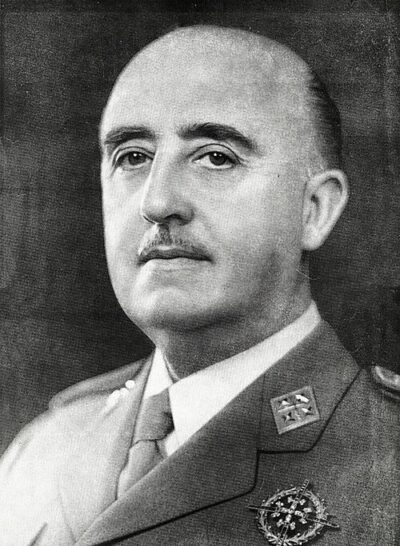 Francisco FrancoSpanish general and dictator (1892–1975)
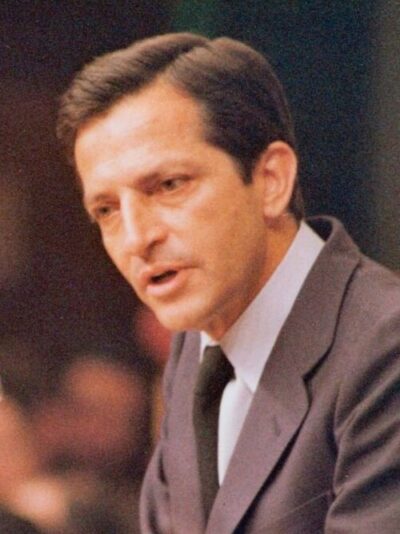 Adolfo Suárez (1958–1977)Prime Minister of Spain (1976–1981)
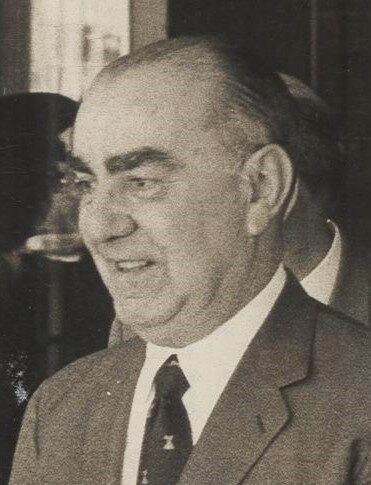 Luis Carrero Blanco (1937–)Spanish admiral and politician
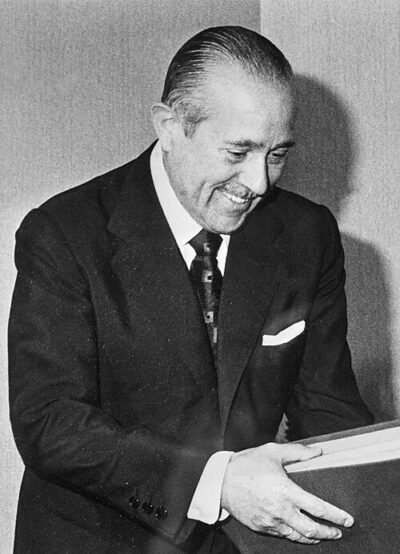 Carlos Arias NavarroSpanish politician (1908–1989)
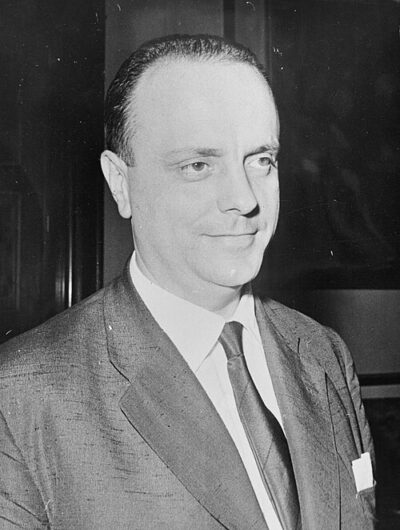 Manuel Fraga (1953–1976)Spanish politician (1922–2012)
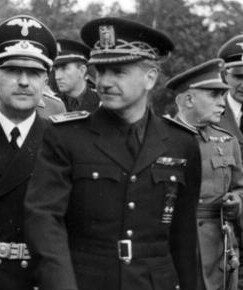 Ramón Serrano SuñerSpanish politician (1901-2003)
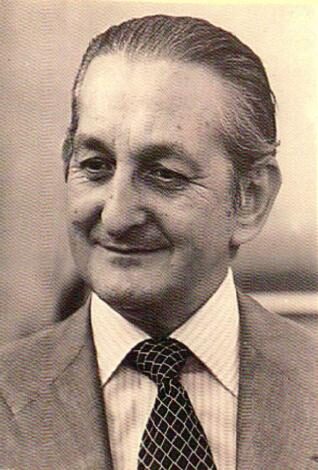 Torcuato Fernández-MirandaSpanish politician (1915-1980)
