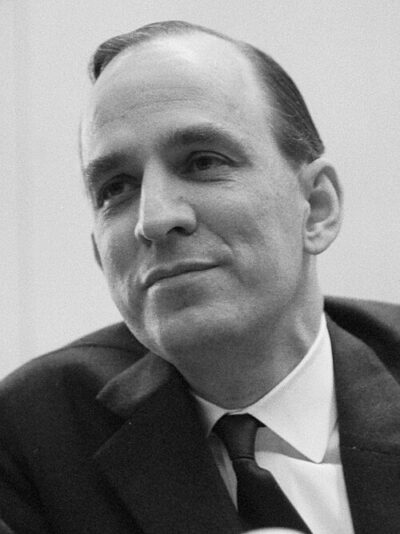
Fanny and Alexander
Fanny and Alexander is a 1982 Swedish film by Ingmar Bergman. It stars Börje Ahlstedt, Anna Bergman and Gunn Wållgren. It won the César Award for Best Foreign Film and 7 more.
- Released
- December 17, 1982
- Directed by
- Ingmar Bergman
- Genre
- drama film
- Country of origin
- France
All 31 facts, and where they come from
Facts
31 facts · 0 confirmed by two sources · 21 cited · 10 from one source
Where this comes from
Papalocal keeps its own record. It started from these sources; what each one said is kept here as it was copied, so a change on their side never changes this page by itself. Tap one to read its version.
What Wikidata says · copied November 17, 2026 · revision 2564713631
- Described as
- 1982 Swedish film by Ingmar Bergman
- Other names
- Fanny & Alexander
- What it is
- film
- Directed by
- Ingmar Bergman · 8 references
- Music by
- Daniel Bell
- Screenplay by
- Ingmar Bergman
- Produced by
- Jörn Donner
- Starring
- Börje Ahlstedt · 4 references; Anna Bergman · 2 references; Gunn Wållgren · 3 references; Kristina Adolphson · 3 references; Erland Josephson · 2 references; Mats Bergman · 2 references; Jarl Kulle · 2 references; Lena Olin · 2 references; Harriet Andersson · 2 references; Allan Edwall · 3 references
- Genre
- drama film · 3 references; Christmas film; historical film
- Released
- December 17, 1982 · 1 reference; June 17, 1983 · 1 reference; October 8, 1983 · 1 reference
- Original language
- Swedish · 1 reference; German · 1 reference
- Country of origin
- France · 3 references; Germany · 2 references
- Awards
- César Award for Best Foreign Film; Academy Award for Best Cinematography (1984) · 1 reference; Academy Award for Best Costume Design (1984) · 1 reference; Academy Award for Best Production Design (1984) · 2 references; Academy Award for Best International Feature Film (1984) · 1 reference; Guldbagge Award for Best Film · 1 reference; BAFTA Award for Best Cinematography · 1 reference; David di Donatello for Best International Film · 1 reference
- Wikipedias with a page
- 51
Wikidata item Q165651 (wikidata.org/wiki/Q165651), public domain (CC0). Copied 2026-11-17.
What Wikipedia says · copied November 17, 2026 · revision 1386060507
Fanny and Alexander (Swedish: Fanny och Alexander) is a 1982 period drama film written and directed by Ingmar Bergman. The plot focuses on two siblings and their large family in Uppsala, Sweden during the first decade of the twentieth century. Following the death of the children's father (Allan Edwall), their mother (Ewa Fröling) remarries a prominent bishop (Jan Malmsjö) who becomes abusive towards Alexander for his vivid imagination.
Bergman intended Fanny and Alexander to be his final picture before retiring, and his script is semi-autobiographical. The characters Alexander, Fanny and stepfather Edvard are based on himself, his sister Margareta and his father Erik Bergman, respectively. Many of the scenes were filmed on location in Uppsala. The documentary film The Making of Fanny and Alexander was made simultaneously with the feature and chronicles its production.
The production was originally conceived as a television miniseries and cut in that version, spanning 312 minutes. A 188-minute cut version was created later for cinematic release, although this version was in fact the one to be released first. The television version has since been released as a complete film, and both versions have been shown in theaters throughout the world. The 312-minute cut is one of the longest cinematic films in history.
The theatrical version was released to universal critical acclaim. It won four Academy Awards, including for Best Foreign Language Film; three Guldbagge Awards, including Best Film; and other honours. Fanny and Alexander was followed by stage adaptations and further semi-autobiographical screenplays by Bergman, released as films in 1992: The Best Intentions, directed by Bille August, and Sunday's Children, directed by Daniel Bergman. On both review websites Rotten Tomatoes and Metacritic it is the highest-rated film of the 1980s, and has since then been regarded as one of Bergman's finest works, one of the greatest works of Swedish cinema, and of all time.
From the Wikipedia article “Fanny and Alexander” (en.wikipedia.org/wiki/Fanny_and_Alexander), by its contributors, under CC BY-SA 4.0 (creativecommons.org/licenses/by-sa/4.0/). Copied 2026-11-17; not changed.
Confirmed Two sources agree. Cited One source, and it names where it got it. One source One source, without a reference of its own. Sources disagree The sources disagree. We show the best-supported value and keep theirs below.
Picture: Sandrew Film & Teater, via Wikimedia Commons · Public domain