
Fatherland Front
The Fatherland Front is an Austrofascist political party. It was founded in 1933 by Engelbert Dollfuss. Its headquarters are in Vienna. It stands for Austrian nationalism, clerical fascism and corporate statism.
- Country
- Austria
- Founded
- May 20, 1933
- Ideology
- Austrian nationalism
- Chair
- Engelbert Dollfuss
All 13 facts, and where they come from
Facts
13 facts · 0 confirmed by two sources · 0 cited · 13 from one source
Where this comes from
Papalocal keeps its own record. It started from these sources; what each one said is kept here as it was copied, so a change on their side never changes this page by itself. Tap one to read its version.
What Wikidata says · copied November 16, 2026 · revision 2565116425
- Described as
- Austrofascist political party
- Other names
- Vaterländische Front, Fatherland's Front, Front of the Fatherland
- What it is
- political party
- Comes after
- Christian Social Party
- Founded
- May 20, 1933
- Ended
- March 13, 1938
- Founded by
- Engelbert Dollfuss
- Headquarters
- Vienna
- Country
- Austria
- Chair
- Engelbert Dollfuss; Kurt Schuschnigg
- Ideology
- Austrian nationalism; clerical fascism; corporate statism; political Catholicism
- Wikipedias with a page
- 28
Wikidata item Q695482 (wikidata.org/wiki/Q695482), public domain (CC0). Copied 2026-11-16.
What Wikipedia says · copied November 16, 2026 · revision 1384208661
The Fatherland Front (Austrian German: Vaterländische Front, VF) was the ruling political organisation of the Federal State of Austria. It claimed to be a nonpartisan movement, and aimed to unite all the people of Austria, overcoming political and social divisions. Established on 20 May 1933 by Christian Social Chancellor Engelbert Dollfuss as the only legally permitted party in the country, it was aligned with the Catholic Church, and did not advocate any racial ideology. A right-wing conservative, authoritarian, nationalist, corporatist, and Catholic organisation, it advocated independence from Germany on the basis of protecting Austria's Catholic religious identity from what they considered a Protestant-dominated German state.
The Fatherland Front, which was strongly linked with Austria's Catholic clergy, absorbed Dollfuss's Christian Social Party, the agrarian Landbund and the right-wing paramilitary Heimwehren, all of which were opposed to Nazism, Marxism, laissez-faire capitalism and liberal democracy. It established an authoritarian and corporatist regime, the Federal State of Austria, which is commonly known in German as the Ständestaat ("corporate state"). According to the Fatherland Front this form of government and society implemented the social teaching of Pope Pius XI's 1931 encyclical Quadragesimo anno. The Front banned and persecuted all its political opponents, including Communists, Social Democrats—who fought against it in a brief civil war in February 1934—as well as the Austrian Nazis who wanted Austria to join Germany. Chancellor Dollfuss was assassinated by the Nazis in July 1934. He was succeeded as leader of the VF and Chancellor of Austria by Kurt Schuschnigg, who ruled until the invigorated Nazis forced him to resign on 11 March 1938. Austria was annexed by Nazi Germany the next day.
The Fatherland Front maintained a cultural and recreational organisation, called "New Life" (Neues Leben), similar to Germany's Strength Through Joy. The "League of Jewish Front Soldiers" (Bund Jüdischer Frontsoldaten), the largest of several Jewish defense paramilitaries active in Austria at the time, was incorporated into the Fatherland Front.
The role of the Fatherland Front has been a contentious point in post-war Austrian historiography. While many historians consider it to be the exponent of an Austrian and Catholic-clerical variant of fascism—dubbed "Austrofascism"—and make it responsible for the failure of liberal democracy in Austria, conservative authors stress its credits in defending the country's independence and opposition to Nazism.
From the Wikipedia article “Fatherland Front (Austria)” (en.wikipedia.org/wiki/Fatherland_Front_(Austria)), by its contributors, under CC BY-SA 4.0 (creativecommons.org/licenses/by-sa/4.0/). Copied 2026-11-16; not changed.
Confirmed Two sources agree. Cited One source, and it names where it got it. One source One source, without a reference of its own. Sources disagree The sources disagree. We show the best-supported value and keep theirs below.
People connected 5
Party members
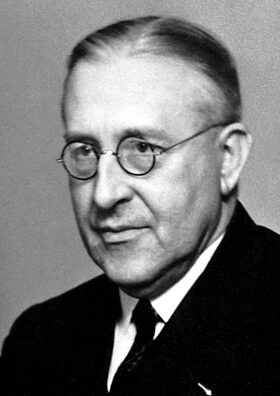 Victor Francis HessAustrian physicist and Nobel prize laureate (1883-1964)
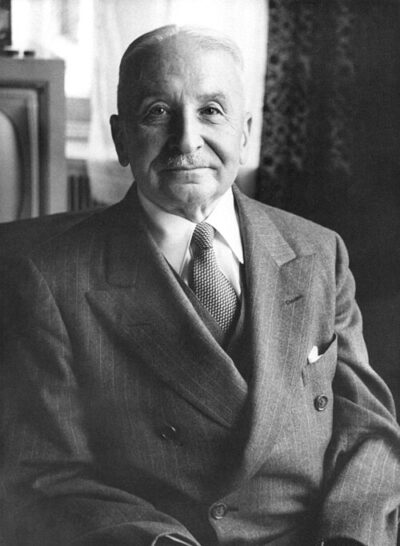 Ludwig von Mises (1934)Austrian-American economist (1881–1973)
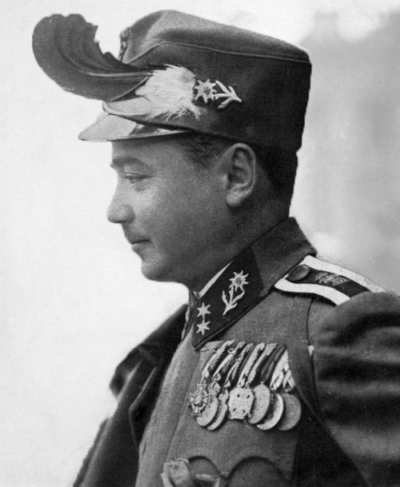 Engelbert Dollfuss (1933–)Austrian Christian Social and Patriotic Front statesman (1892-1934)
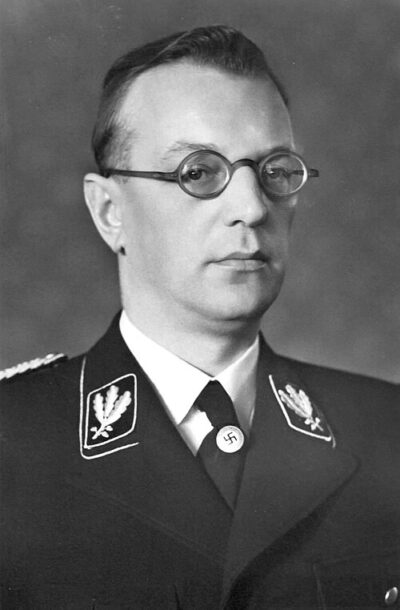 Arthur Seyss-InquartAustrian Nazi politician, and Nazi ruler of occupied Netherlands, convicted of crimes against humanity and sentenced to death (1892–1946)
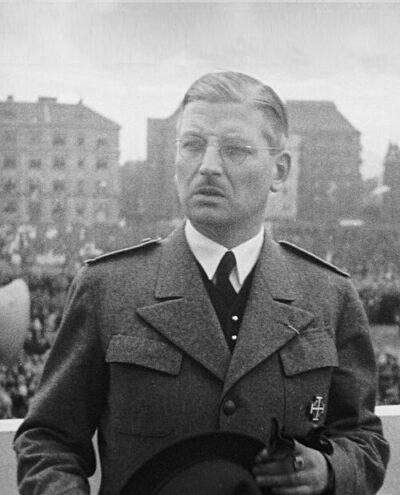 Kurt SchuschniggChancellor of Austria (1897-1977)
