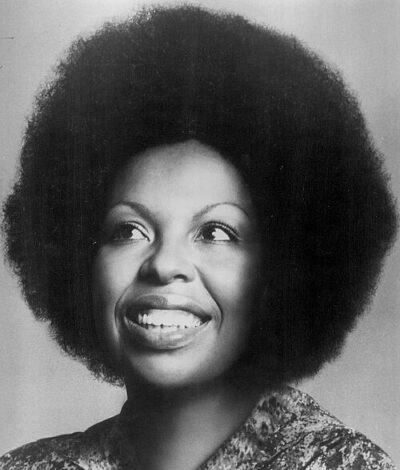
Feel Like Makin' Love
Feel Like Makin' Love is a 1974 single by Roberta Flack.
- Released
- June 10, 1974
- Performed by
- Roberta Flack
- Genre
- soul
- Country of origin
- United States
All 8 facts, and where they come from
Facts
8 facts · 0 confirmed by two sources · 0 cited · 8 from one source
Where this comes from
Papalocal keeps its own record. It started from these sources; what each one said is kept here as it was copied, so a change on their side never changes this page by itself. Tap one to read its version.
What Wikidata says · copied November 16, 2026 · revision 2481294608
- Described as
- 1974 single by Roberta Flack
- What it is
- single
- Performed by
- Roberta Flack
- Produced by
- Roberta Flack
- Genre
- soul
- Released
- June 10, 1974
- Country of origin
- United States
- Comes after
- Crazy
- Record label
- Atlantic Records
- Wikipedias with a page
- 5
Wikidata item Q5441301 (wikidata.org/wiki/Q5441301), public domain (CC0). Copied 2026-11-16.
What Wikipedia says · copied November 16, 2026 · revision 1383410334
"Feel Like Makin' Love" is a song composed by singer-songwriter and producer Eugene McDaniels, and recorded originally by soul singer-songwriter Roberta Flack. The lyrics describe times that the singer feels romantic, including "watching winter turn to spring" and "holding hands by candlelight." The song peaked atop the singles chart in Canada and the U.S. Billboard Hot 100. It received three Grammy Award nominations for Record of the Year, Song of the Year, and Best Female Pop Vocal Performance.
"Feel Like Makin' Love" has been covered by various R&B and jazz artists including D’Angelo, Roy Ayers, Gladys Knight & the Pips, Lou Rawls, Isaac Hayes, George Benson, Shirley Bassey, Jeffrey Osborne, Larry Coryell, Johnny Mathis, Marlena Shaw.
From the Wikipedia article “Feel Like Makin' Love (Roberta Flack song)” (en.wikipedia.org/wiki/Feel_Like_Makin'_Love_(Roberta_Flack_song)), by its contributors, under CC BY-SA 4.0 (creativecommons.org/licenses/by-sa/4.0/). Copied 2026-11-16; not changed.
Confirmed Two sources agree. Cited One source, and it names where it got it. One source One source, without a reference of its own. Sources disagree The sources disagree. We show the best-supported value and keep theirs below.