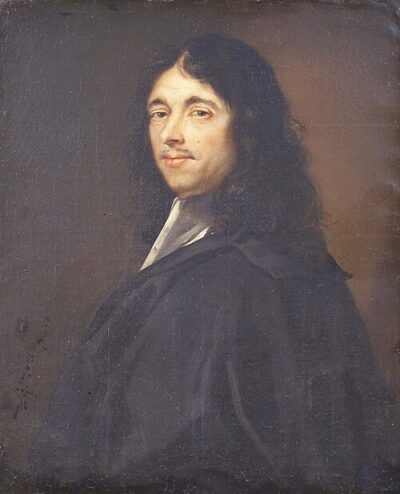
Fermat number
Fermat number is a positive integer of the form (2^(2^n))+1.
All 2 facts, and where they come from
Facts
2 facts · 0 confirmed by two sources · 0 cited · 2 from one source
Where this comes from
Papalocal keeps its own record. It started from these sources; what each one said is kept here as it was copied, so a change on their side never changes this page by itself. Tap one to read its version.
What Wikidata says · copied November 17, 2026 · revision 2568272703
- Described as
- positive integer of the form (2^(2^n))+1
- What it is
- Lucas sequence
- Named after
- Pierre de Fermat
- Wikipedias with a page
- 44
Wikidata item Q207264 (wikidata.org/wiki/Q207264), public domain (CC0). Copied 2026-11-17.
What Wikipedia says · copied November 17, 2026 · revision 1385408083
In mathematics, a Fermat number, named after Pierre de Fermat (1601–1665), the first known to have studied them, is a positive integer of the form: Fn=22n+1, where n is a non-negative integer. The first few Fermat numbers are: 3, 5, 17, 257, 65537, 4294967297, 18446744073709551617, 340282366920938463463374607431768211457, ... (sequence A000215 in the OEIS).
If 2k + 1 is prime and k > 0, then k itself must be a power of 2, so 2k + 1 is a Fermat number; such primes are called Fermat primes. As of 2026, the only known Fermat primes are F0 = 3, F1 = 5, F2 = 17, F3 = 257, and F4 = 65537 (sequence A019434 in the OEIS).
From the Wikipedia article “Fermat number” (en.wikipedia.org/wiki/Fermat_number), by its contributors, under CC BY-SA 4.0 (creativecommons.org/licenses/by-sa/4.0/). Copied 2026-11-17; not changed.
Confirmed Two sources agree. Cited One source, and it names where it got it. One source One source, without a reference of its own. Sources disagree The sources disagree. We show the best-supported value and keep theirs below.