
Fidesz
Fidesz is a Hungarian political party. It was founded in 1988 by Viktor Orbán, Gábor Fodor and László Kövér. Its headquarters are in Budapest. It stands for national conservatism, right-wing populism and economic nationalism. It won the Rafto Prize.
- Country
- Hungary
- Founded
- March 30, 1988
- Ideology
- national conservatism (1993–)
All 16 facts, and where they come from
Facts
16 facts · 0 confirmed by two sources · 0 cited · 16 from one source
Where this comes from
Papalocal keeps its own record. It started from these sources; what each one said is kept here as it was copied, so a change on their side never changes this page by itself. Tap one to read its version.
What Wikidata says · copied November 17, 2026 · revision 2555339978
- Described as
- Hungarian political party
- Other names
- Fidesz-Magyar Polgári Szövetség-Keresztény Demokrata Néppárt
- What it is
- political party
- Founded
- March 30, 1988
- Founded by
- Viktor Orbán · 1 reference; Gábor Fodor · 1 reference; László Kövér · 1 reference; József Szájer · 1 reference
- Headquarters
- Budapest
- Country
- Hungary
- Chair
- collective leadership (1988–1993); Viktor Orbán (2 times) (1993–)
- Ideology
- national conservatism (1993–); right-wing populism (1993–); economic nationalism (1993–); liberalism (1988–1993)
- Awards
- Rafto Prize (1989)
- Official website
- https://www.fidesz.hu/
- Wikipedias with a page
- 55
Wikidata item Q387006 (wikidata.org/wiki/Q387006), public domain (CC0). Copied 2026-11-17.
What Wikipedia says · copied November 17, 2026 · revision 1386104973
Fidesz – Hungarian Civic Alliance is a political party in Hungary led by Viktor Orbán. It is most notable for dominating Hungarian politics from 2010 to 2026, a period known as the Orbán era. Earlier, from 1998 to 2002, it was the senior partner in a conservative coalition government. Founded as a classical liberal party, Fidesz gradually moved to the right and is presently considered a right-wing or far-right party. Its ideology, referred to as Orbanism, includes national conservatism, Christian nationalism, right-wing populism, authoritarianism and illiberalism. It is Eurosceptic in foreign policy.
Fidesz was established in 1988 as the Alliance of Young Democrats (Fiatal Demokraták Szövetsége, shortened to Fidesz), a centre-left and liberal activist student movement opposed to state communism. During Hungary's transition to multiparty democracy (Hungarian: rendszerváltás) in 1989-90, the movement became a political party and entered the National Assembly with Orbán at its helm after the 1990 election. Fidesz emerged as the largest parliamentary party after the 1998 election. During this period, it adopted nationalism and saw its popularity stagnate due to corruption scandals. While in opposition between 2002 and 2010, Fidesz formed an electoral alliance with the Christian Democratic People's Party (KDNP), which would eventually become its satellite party.
After winning a parliamentary supermajority in the 2010 election, Fidesz pursued national-conservative, Christian-nationalist, and Eurosceptic policies. Using its supermajority, it promulgated a new constitution, the Fundamental Law, in 2011, which further consolidated its power. In the following decade, Hungary experienced democratic backsliding as Fidesz developed a governance strategy of clientelism and institutional capture called the "System of National Cooperation" (Hungarian: Nemzeti Együttműködés Rendszere or NER). Despite popular dissatisfaction with NER corruption, Fidesz won supermajority victories in the 2014, 2018, and 2022 parliamentary elections while adopting new themes, including anti-immigrant rhetoric during the 2015 migrant crisis and Russophilic rhetoric after Russia's 2022 invasion of Ukraine. Fidesz lost the 2026 election to the centre-right Tisza Party.
Fidesz currently enjoys majorities in all 19 county assemblies and endorsed every successful presidential candidate from 2000 to 2024. It is in opposition in the National Assembly and the General Assembly of Budapest. Reflecting its shifting political position, Fidesz was, until 2000, a member of the Liberal International; from 2000 to 2021, of the centre-right European People's Party; and from 2024 onwards, of Patriots for Europe, a right-wing populist formation it founded with ANO 2011 and the Freedom Party of Austria. Fidesz's governance and political communication strategies have exercised a strong influence on right-wing European politics and on conservatism in the United States, especially after the Republican Party's shift toward Trumpism in the late 2010s.
From the Wikipedia article “Fidesz” (en.wikipedia.org/wiki/Fidesz), by its contributors, under CC BY-SA 4.0 (creativecommons.org/licenses/by-sa/4.0/). Copied 2026-11-17; not changed.
Confirmed Two sources agree. Cited One source, and it names where it got it. One source One source, without a reference of its own. Sources disagree The sources disagree. We show the best-supported value and keep theirs below.
People connected 9
Party members
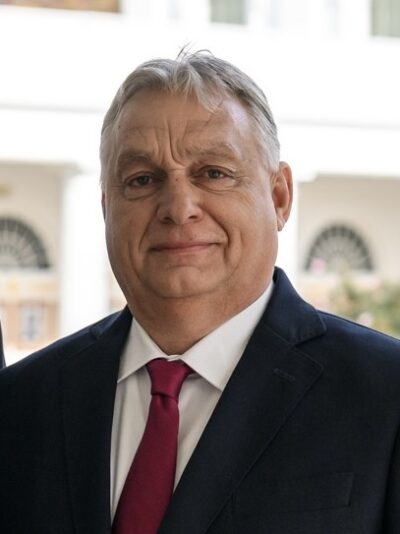 Viktor Orbán (1988–)Prime Minister of Hungary (1998–2002; 2010–2026) (born 1963)
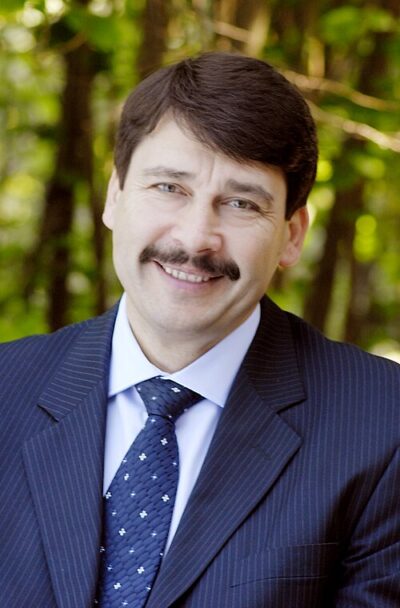 János Áder (1988–)President of Hungary from 2012 to 2022 (born 1959)
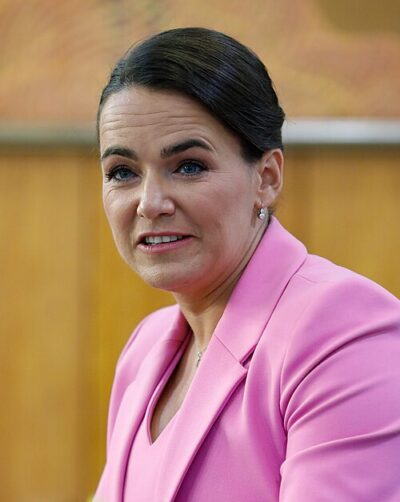 Katalin NovákPresident of Hungary from 2022 to 2024
 Péter Magyar (2002–2024)Hungarian lawyer and politician, Prime Minister of Hungary since 2026
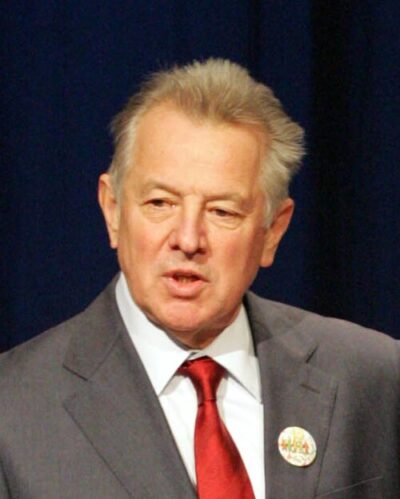 Pál SchmittPresident of Hungary from 2010 to 2012
 László Kövér (1988–)Hungarian politician (1959–)
 Péter SzijjártóHungarian politician, member of the National Assembly of Hungary since 2002
 Judit VargaHungarian politician, joiner (1980–)
 Gábor Vona (2001–2003)Hungarian politician
