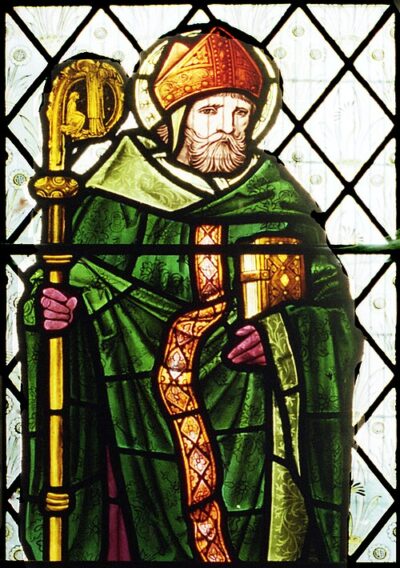
Franciscans
Franciscans is a from 1517, group of three religious orders within the Catholic Church. It was founded in 1209 by Francis of Assisi.
- Founded
- 1209
- Founded by
- Francis of Assisi
- Country
- Italy
All 8 facts, and where they come from
Facts
8 facts · 0 confirmed by two sources · 1 cited · 7 from one source
Where this comes from
Papalocal keeps its own record. It started from these sources; what each one said is kept here as it was copied, so a change on their side never changes this page by itself. Tap one to read its version.
What Wikidata says · copied November 17, 2026 · revision 2558608784
- Described as
- from 1517, group of three religious orders within the Catholic Church
- Other names
- Seraphic Order, Ordo Fratrum Minorum, OFM, Minorites, Grey Friars, Franciscan, O.F.M.
- What it is
- mendicant order (1209–1517); former entity; organization · 1 reference
- Founded
- 1209
- Founded by
- Francis of Assisi · 1 reference
- Located in
- Assisi
- Country
- Italy
- Named after
- Francis of Assisi
- Wikipedias with a page
- 68
Wikidata item Q165005 (wikidata.org/wiki/Q165005), public domain (CC0). Copied 2026-11-17.
What Wikipedia says · copied November 17, 2026 · revision 1383109505
The Franciscans are a group of related organizations in the Catholic Church, founded by the Italian saint Francis of Assisi. They include three independent religious orders for men (the Order of Friars Minor being the largest contemporary male order), an order for nuns known as the Order of Saint Clare, and the Third Order of Saint Francis, a religious and secular group open to male and female members.
Franciscans adhere to the teachings and spiritual disciplines of the founder and of his main associates and followers, such as Clare of Assisi, Anthony of Padua, and Elizabeth of Hungary. Several smaller Protestant Franciscan orders have been established since the late 19th century as well, particularly in the Lutheran and Anglican traditions. Certain Franciscan communities are ecumenical in nature, having members who belong to several Christian denominations.
Francis began preaching around 1207 and traveled to Rome to seek approval from Pope Innocent III in 1209 to form a religious order. The original Rule of Saint Francis approved by the pope did not allow ownership of property, requiring members of the order to beg for food while preaching. The austerity was meant to emulate the life and ministry of Jesus Christ. Franciscans traveled and preached in the streets, while staying in church properties. Clare, under Francis's guidance, founded the Poor Clares (Order of Saint Clare) of the Franciscans.
The extreme poverty required of members was relaxed in the final revision of the rule in 1223. The degree of observance required of members remained a major source of conflict within the order, resulting in numerous secessions. The Order of Friars Minor, previously known as the "Observant" branch, is one of the three Franciscan First Orders within the Catholic Church, the others being the "Conventuals", formed in 1209, and the "Capuchins", founded in 1520.
The Order of Friars Minor in its current form is the result of an amalgamation of several smaller orders completed in 1897 by Pope Leo XIII. The Capuchins and Conventuals remain distinct religious institutes within the Catholic Church, observing the Rule of Saint Francis with different emphases. Conventual Franciscans are sometimes referred to as minorites or greyfriars because of their habit. In Poland and Lithuania they are known as Bernardines, after Bernardino of Siena, although the term elsewhere refers to Cistercians instead.
From the Wikipedia article “Franciscans” (en.wikipedia.org/wiki/Franciscans), by its contributors, under CC BY-SA 4.0 (creativecommons.org/licenses/by-sa/4.0/). Copied 2026-11-17; not changed.
Confirmed Two sources agree. Cited One source, and it names where it got it. One source One source, without a reference of its own. Sources disagree The sources disagree. We show the best-supported value and keep theirs below.
Picture: Wikimedia Commons: Furta klasztorna.jpg · See Commons file page