
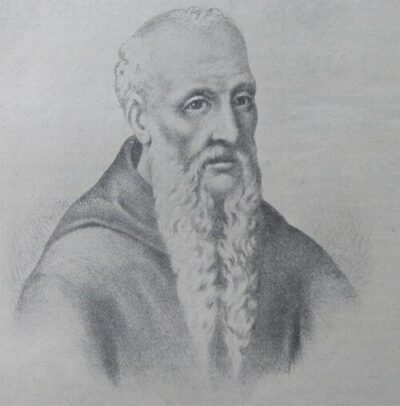
Odoric of Pordenone
Odoric of Pordenone was the 14th-century Italian Franciscan friar, missionary, and explorer. Born 1286, in Pordenone. Died January 14, 1331, in Udine. Known for Itinerarium de mirabilibus orientalium Tartarorum and De Terra sancta.
Facts
18 facts · 1 confirmed by two sources · 11 cited · 5 from one source · 1 where the sources disagree
What’s different
- Buried in: we show Province of Udine (Sources disagree). Wikidata also lists Beata Vergine del Carmine
Where this comes from
Papalocal keeps its own record. It started from these sources; what each one said is kept here as it was copied, so a change on their side never changes this page by itself. Tap one to read its version.
What Wikidata says · copied November 16, 2026 · revision 2567361846
- Described as
- 14th-century Italian Franciscan friar, missionary, and explorer
- Other names
- Odoric, Friar Odoric, Odorico, Odorico di Pordenone, Odorico of Pordenone, Odoric of Portenau, Odoric of Porterone, Blessed Odoric, Blessed Odoric of Pordenone, Bl. Odoric, Bl. Odoric of Pordenone, Odoricus
- Born
- 1286 · 1 reference; 1286 · 1 reference
- Died
- January 14, 1331 · 1 reference
- Born in
- Pordenone · 1 reference
- Died in
- Udine · 1 reference
- Buried in
- Province of Udine; Beata Vergine del Carmine
- Citizen of
- Republic of Venice
- Occupation
- explorer; writer · 1 reference; missionary · 2 references; world traveler · 1 reference; monk · 1 reference; traveler · 1 reference
- Known for
- Itinerarium de mirabilibus orientalium Tartarorum; De Terra sancta
- Field
- Franciscans · 1 reference; missionary work · 1 reference; travel book · 1 reference
- Religion
- Christianity
- Wikipedias with a page
- 35
Wikidata item Q379733 (wikidata.org/wiki/Q379733), public domain (CC0). Copied November 16, 2026.
What Wikipedia says · copied November 16, 2026 · revision 1383574913
Odoric of Pordenone (c. 1280 – 14 January 1331) was a Franciscan friar and missionary explorer from Friuli in northeast Italy. He journeyed through India, Sumatra, Java, and China, where he spent three years in the imperial capital of Khanbaliq (now Beijing). After more than ten years of travel, he returned home and dictated a narrative of his experiences and observations called the Relatio, highlighting various cultural, religious, and social peculiarities he encountered in Asia.
His manuscript was copied multiple times and distributed widely across Europe, both in the original Latin and several vernacular translations including Italian, French, and German. The Relatio was an important contribution to Europe's growing awareness of the Far East.
Odoric's account was a primary source for the account of Mandeville's Travels. Many of the incredible reports about Asia in Mandeville have proven to be versions of Odoric's eyewitness descriptions.
After his death, Odoric became an object of popular devotion and was beatified in 1755.
- Born, in its opening lines
- c. 1280
- Died, in its opening lines
- January 14, 1331
From the Wikipedia article “Odoric of Pordenone” (en.wikipedia.org/wiki/Odoric_of_Pordenone), by its contributors, under CC BY-SA 4.0 (creativecommons.org/licenses/by-sa/4.0/). Copied November 16, 2026; not changed.
Confirmed Two sources agree. Cited One source, and it names where it got it. One source One source, without a reference of its own. Sources disagree The sources disagree. We show the best-supported value and keep theirs below.
