Friedmann equations
Friedmann equations is a set of ordinary differential equations governing cosmic expansion in a homogeneous and isotropic universe.
All 2 facts, and where they come from
Facts
2 facts · 0 confirmed by two sources · 0 cited · 2 from one source
Where this comes from
Papalocal keeps its own record. It started from these sources; what each one said is kept here as it was copied, so a change on their side never changes this page by itself. Tap one to read its version.
What Wikidata says · copied November 17, 2026 · revision 2491726829
- Described as
- set of ordinary differential equations governing cosmic expansion in a homogeneous and isotropic universe
- Other names
- Friedmann–Lemaître equations
- What it is
- system of differential equations
- Named after
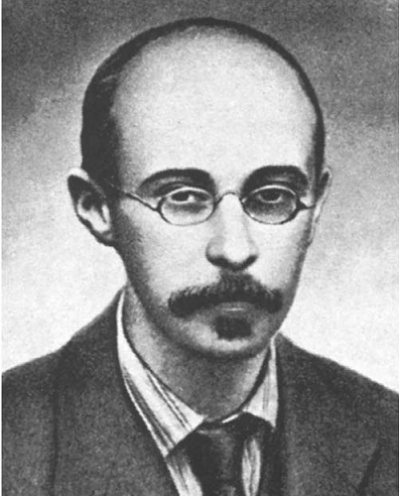
- Alexander Friedmann
- Wikipedias with a page
- 33
Wikidata item Q467736 (wikidata.org/wiki/Q467736), public domain (CC0). Copied 2026-11-17.
What Wikipedia says · copied November 17, 2026 · revision 1381288652
The Friedmann equations, also known as the Friedmann–Lemaître (FL) equations, are a set of equations in physical cosmology that govern cosmic expansion in homogeneous and isotropic models of the universe within the context of general relativity. They were first derived by Alexander Friedmann in 1922 from Einstein's field equations of gravitation for the Friedmann–Lemaître–Robertson–Walker metric and a perfect fluid with a given mass density ρ and pressure p. The equations for negative spatial curvature were given by Friedmann in 1924.
The physical models built on the Friedmann equations are called FRW or FLRW models and form the Standard Model of modern cosmology, although such a description is also associated with the further developed Lambda-CDM model. The FLRW model was developed independently by the named authors in the 1920s and 1930s.
From the Wikipedia article “Friedmann equations” (en.wikipedia.org/wiki/Friedmann_equations), by its contributors, under CC BY-SA 4.0 (creativecommons.org/licenses/by-sa/4.0/). Copied 2026-11-17; not changed.
Confirmed Two sources agree. Cited One source, and it names where it got it. One source One source, without a reference of its own. Sources disagree The sources disagree. We show the best-supported value and keep theirs below.