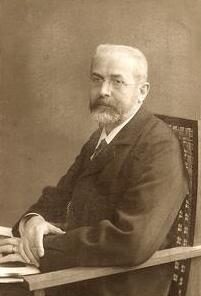
Frobenius algebra
Frobenius algebra is a finite-dimensional unital associative algebra with a compatible bilinear form.
All 2 facts, and where they come from
Facts
2 facts · 0 confirmed by two sources · 0 cited · 2 from one source
Where this comes from
Papalocal keeps its own record. It started from these sources; what each one said is kept here as it was copied, so a change on their side never changes this page by itself. Tap one to read its version.
What Wikidata says · copied November 17, 2026 · revision 2542239398
- Described as
- finite-dimensional unital associative algebra with a compatible bilinear form
- What it is
- mathematical concept
- Named after
- Ferdinand Georg Frobenius
- Wikipedias with a page
- 7
Wikidata item Q5505100 (wikidata.org/wiki/Q5505100), public domain (CC0). Copied 2026-11-17.
What Wikipedia says · copied November 17, 2026 · revision 1364315251
In mathematics, especially in the fields of representation theory and module theory, a Frobenius algebra is a finite-dimensional unital associative algebra with a special kind of bilinear form which gives the algebras particularly nice duality theories. Frobenius algebras began to be studied in the 1930s by Richard Brauer and Cecil Nesbitt and were named after Georg Frobenius. Tadashi Nakayama discovered the beginnings of a rich duality theory (Nakayama 1939), (Nakayama 1941). Jean Dieudonné used this to characterize Frobenius algebras (Dieudonné 1958). Frobenius algebras were generalized to quasi-Frobenius rings, those Noetherian rings whose right regular representation is injective. In recent times, interest has been renewed in Frobenius algebras due to connections to topological quantum field theory.
From the Wikipedia article “Frobenius algebra” (en.wikipedia.org/wiki/Frobenius_algebra), by its contributors, under CC BY-SA 4.0 (creativecommons.org/licenses/by-sa/4.0/). Copied 2026-11-17; not changed.
Confirmed Two sources agree. Cited One source, and it names where it got it. One source One source, without a reference of its own. Sources disagree The sources disagree. We show the best-supported value and keep theirs below.