Gabinetto Vieusseux
Gabinetto Vieusseux is a cultural institution in Florence, Italy. It was founded in 1819 by Giovan Pietro Vieusseux. Its headquarters are in Palazzo Strozzi.
- Founded
- 1819
- Founded by
- Giovan Pietro Vieusseux
- Headquarters
- Palazzo Strozzi
- Country
- Kingdom of Italy (1861–)
All 10 facts, and where they come from
Facts
10 facts · 0 confirmed by two sources · 1 cited · 9 from one source
Where this comes from
Papalocal keeps its own record. It started from these sources; what each one said is kept here as it was copied, so a change on their side never changes this page by itself. Tap one to read its version.
What Wikidata says · copied November 17, 2026 · revision 2388221357
- Described as
- cultural institution in Florence, Italy
- Other names
- Gabinetto Scientifico Letterario G. P. Vieusseux, Gabinetto Scientifico Letterario Vieusseux, Gabinetto G. P. Vieusseux, Gabinetto Scientifico Letterario Giovan Pietro Vieusseux
- What it is
- cultural institution; archives · 1 reference
- Founded
- 1819
- Founded by
- Giovan Pietro Vieusseux
- Headquarters
- Palazzo Strozzi
- Located in
- Florence · 1 reference
- Country
- Grand Duchy of Tuscany (–1860); Kingdom of Italy (1861–)
- Named after
- Giovan Pietro Vieusseux
- Official website
- http://www.vieusseux.fi.it
- Wikipedias with a page
- 5
Wikidata item Q930825 (wikidata.org/wiki/Q930825), public domain (CC0). Copied 2026-11-17.
What Wikipedia says · copied November 17, 2026 · revision 1308875747
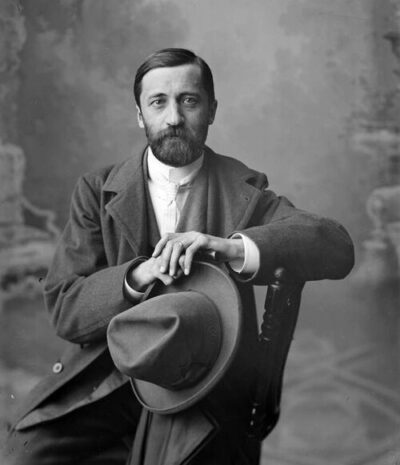
The Gabinetto scientifico-letterario G. P. Vieusseux ("G. P. Vieusseux Scientific and Literary Office") is a library in Florence, Italy, founded in 1819 by Giovan Pietro Vieusseux, a merchant and publisher from Oneglia. It played a vital role in linking the culture of Italy with that of other European countries in the 19th century, and also became one of the chief reference points for the Risorgimento movement.
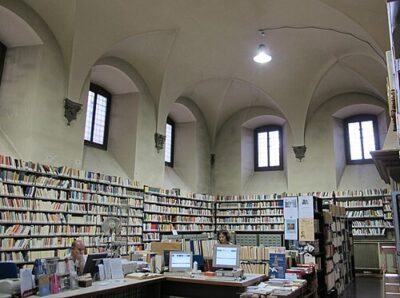
It began as a reading room that provided leading European periodicals for Florentines and visitors from abroad in a setting that encouraged conversation and the exchange of ideas. A circulating library with the latest publications in Italian, French and English was installed next to the reading room.
Giacomo Leopardi and Alessandro Manzoni frequented the Gabinetto Vieusseux when they were in Florence, as did Stendhal, Schopenhauer, J. F. Cooper, Thackeray, Dostoevsky, George Gissing, Mark Twain, Émile Zola, André Gide, Kipling, Aldous Huxley and D. H. Lawrence. The institute was run privately by the Vieusseux family until 1919 when it became a foundation with a governing body headed by the Mayor of Florence or one of his delegates.
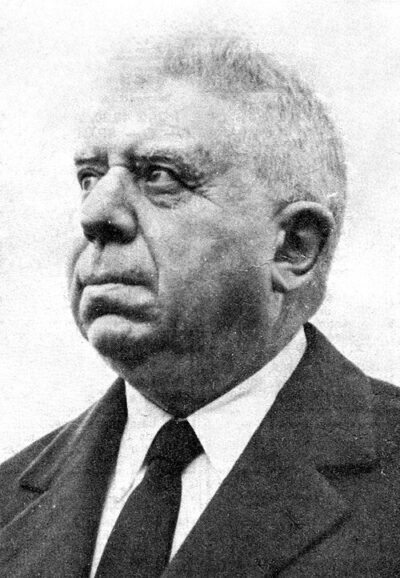
Its work continued in the 20th century under the direction of distinguished men of letters such as Bonaventura Tecchi, Eugenio Montale and, for forty years, Alessandro Bonsanti, who set up three new departments: the Laboratory for the conservation of books damaged in the 1966 flood of the Arno, the Centro Romantico, specializing in studies in romanticism and the 19th century, and the Archivio Contemporaneo, now named after Bonsanti, which houses manuscripts, private papers and private libraries donated by leading figures in 20th-century culture. The library continues to expand according to the criteria laid down by its founder.
The institute also organizes meetings, conferences and exhibitions throughout the year; in 1995 the quarterly review founded by Bonsanti in 1966 Antologia Vieusseux (new series) resumed publication.
From the Wikipedia article “Gabinetto Vieusseux” (en.wikipedia.org/wiki/Gabinetto_Vieusseux), by its contributors, under CC BY-SA 4.0 (creativecommons.org/licenses/by-sa/4.0/). Copied 2026-11-17; not changed.
Confirmed Two sources agree. Cited One source, and it names where it got it. One source One source, without a reference of its own. Sources disagree The sources disagree. We show the best-supported value and keep theirs below.
Picture: sailko, via Wikimedia Commons · CC BY-SA 3.0