Galilean transformation
Galilean transformation is a transform between the coordinates of two reference frames which differ only by constant relative motion within the constructs of Newtonian physics.
All 1 facts, and where they come from
Facts
1 facts · 0 confirmed by two sources · 0 cited · 1 from one source
Where this comes from
Papalocal keeps its own record. It started from these sources; what each one said is kept here as it was copied, so a change on their side never changes this page by itself. Tap one to read its version.
What Wikidata says · copied November 17, 2026 · revision 2515854095
- Described as
- transform between the coordinates of two reference frames which differ only by constant relative motion within the constructs of Newtonian physics
- Other names
- Galilean group
- Named after
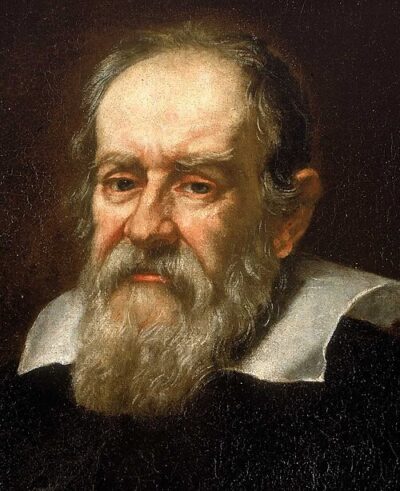
- Galileo Galilei
- Wikipedias with a page
- 42
Wikidata item Q219207 (wikidata.org/wiki/Q219207), public domain (CC0). Copied 2026-11-17.
What Wikipedia says · copied November 17, 2026 · revision 1379492909
In physics, a Galilean transformation is used to transform between the coordinates of two reference frames which differ only by constant relative motion within the constructs of Newtonian physics. These transformations together with spatial rotations and translations in space and time form the inhomogeneous Galilean group (assumed throughout below). Without the translations in space and time the group is the homogeneous Galilean group. The Galilean group is the group of motions of Galilean relativity acting on the four dimensions of space and time, forming the Galilean geometry. This is the passive transformation point of view. In special relativity the homogeneous and inhomogeneous Galilean transformations are, respectively, replaced by the Lorentz transformations and Poincaré transformations; conversely, the group contraction in the classical limit c → ∞ of Poincaré transformations yields Galilean transformations.
The equations below are only physically valid in a Newtonian framework, and not applicable to coordinate systems moving relative to each other at speeds approaching the speed of light.
Galileo formulated these concepts in his description of uniform motion.
The topic was motivated by his description of the motion of a ball rolling down a ramp, by which he measured the numerical value for the acceleration of gravity near the surface of the Earth.
From the Wikipedia article “Galilean transformation” (en.wikipedia.org/wiki/Galilean_transformation), by its contributors, under CC BY-SA 4.0 (creativecommons.org/licenses/by-sa/4.0/). Copied 2026-11-17; not changed.
Confirmed Two sources agree. Cited One source, and it names where it got it. One source One source, without a reference of its own. Sources disagree The sources disagree. We show the best-supported value and keep theirs below.