Gauss's law for magnetism
Gauss's law for magnetism is a foundational law of classical magnetism.
All 2 facts, and where they come from
Facts
2 facts · 0 confirmed by two sources · 0 cited · 2 from one source
Where this comes from
Papalocal keeps its own record. It started from these sources; what each one said is kept here as it was copied, so a change on their side never changes this page by itself. Tap one to read its version.
What Wikidata says · copied November 17, 2026 · revision 2532462163
- Described as
- foundational law of classical magnetism
- What it is
- physical law
- Named after
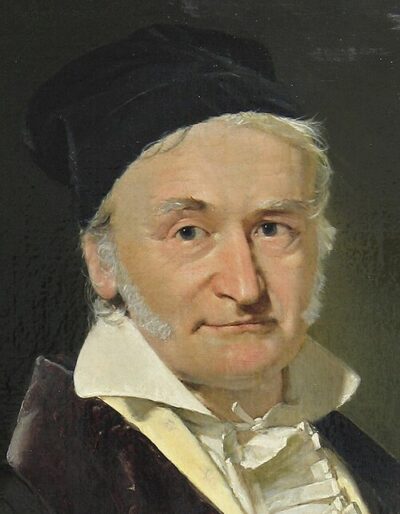
- Carl Friedrich Gauss
- Wikipedias with a page
- 30
Wikidata item Q1195250 (wikidata.org/wiki/Q1195250), public domain (CC0). Copied 2026-11-17.
What Wikipedia says · copied November 17, 2026 · revision 1356867671
In physics, Gauss's law for magnetism is one of the four Maxwell's equations that underlie classical electrodynamics. It states that the magnetic field B has divergence equal to zero, in other words, that it is a solenoidal vector field. It is equivalent to the statement that magnetic monopoles do not exist. Rather than "magnetic charges", the basic entity for magnetism is the magnetic dipole. (If monopoles were ever found, the law would have to be modified, as elaborated below.)
Gauss's law for magnetism can be written in two forms, a differential form and an integral form. These forms are equivalent due to the divergence theorem.
The name "Gauss's law for magnetism" is not universally used. The law is also called "Absence of free magnetic poles". It is also referred to as the "transversality requirement" because for plane waves it requires that the polarization be transverse to the direction of propagation.
From the Wikipedia article “Gauss's law for magnetism” (en.wikipedia.org/wiki/Gauss's_law_for_magnetism), by its contributors, under CC BY-SA 4.0 (creativecommons.org/licenses/by-sa/4.0/). Copied 2026-11-17; not changed.
Confirmed Two sources agree. Cited One source, and it names where it got it. One source One source, without a reference of its own. Sources disagree The sources disagree. We show the best-supported value and keep theirs below.