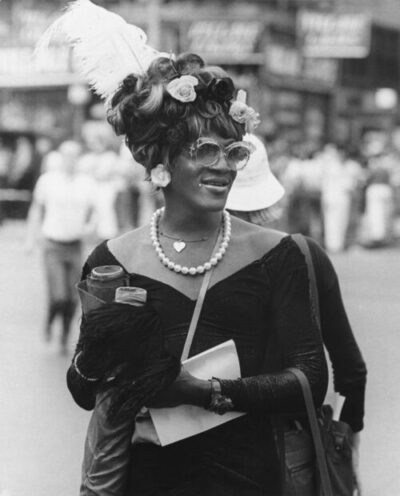
Gay Liberation Front
The Gay Liberation Front is an advocacy group. It was founded in 1969.
- Founded
- 1969
- Country
- United States
All 4 facts, and where they come from
Facts
4 facts · 0 confirmed by two sources · 1 cited · 3 from one source
Where this comes from
Papalocal keeps its own record. It started from these sources; what each one said is kept here as it was copied, so a change on their side never changes this page by itself. Tap one to read its version.
What Wikidata says · copied November 17, 2026 · revision 2534177958
- Described as
- advocacy group
- Other names
- GLF
- What it is
- LGBTQ+ rights organization
- Founded
- 1969
- Ended
- 1973 · 1 reference
- Country
- United States
- Wikipedias with a page
- 24
Wikidata item Q920919 (wikidata.org/wiki/Q920919), public domain (CC0). Copied 2026-11-17.
What Wikipedia says · copied November 17, 2026 · revision 1383736483
The Gay Liberation Front (GLF) was the name of several gay liberation groups around the world, the first of which was formed in New York City in 1969, immediately after the Stonewall riots. Similar organizations also formed soon after in the UK, Australia and Canada. The original GLF provided a voice for the newly-out and newly radicalized gay community, and a meeting place for a number of activists who would go on to form other groups, such as the Gay Activists Alliance, Gay Youth New York, and Street Transvestite Action Revolutionaries (STAR) in the US. In the UK and Canada, activists also developed a platform for gay liberation and demonstrated for gay rights. Activists from both the US and UK groups would later go on to found or be active in groups including ACT UP, the Lesbian Avengers, Queer Nation, Sisters of Perpetual Indulgence, and Stonewall.
From the Wikipedia article “Gay Liberation Front” (en.wikipedia.org/wiki/Gay_Liberation_Front), by its contributors, under CC BY-SA 4.0 (creativecommons.org/licenses/by-sa/4.0/). Copied 2026-11-17; not changed.
Confirmed Two sources agree. Cited One source, and it names where it got it. One source One source, without a reference of its own. Sources disagree The sources disagree. We show the best-supported value and keep theirs below.