Gibbs paradox
Gibbs paradox is a thought experiment in physics.
All 1 facts, and where they come from
Facts
1 facts · 0 confirmed by two sources · 0 cited · 1 from one source
Where this comes from
Papalocal keeps its own record. It started from these sources; what each one said is kept here as it was copied, so a change on their side never changes this page by itself. Tap one to read its version.
What Wikidata says · copied November 16, 2026 · revision 2556183278
- Described as
- thought experiment in physics
- What it is
- physical theory
- Wikipedias with a page
- 20
Wikidata item Q691387 (wikidata.org/wiki/Q691387), public domain (CC0). Copied 2026-11-16.
What Wikipedia says · copied November 16, 2026 · revision 1361068283
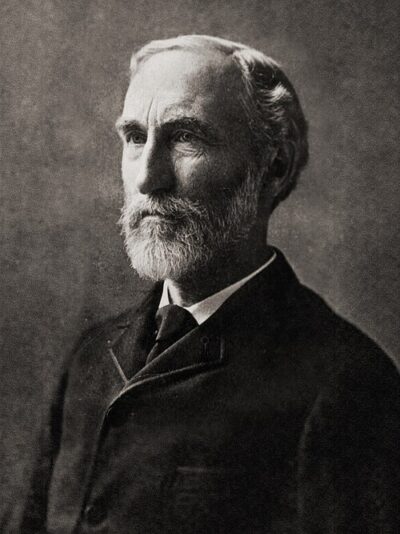
In statistical mechanics, a semi-classical derivation of entropy that does not take into account the indistinguishability of particles yields an expression for entropy which is not extensive (is not proportional to the amount of substance in question). This leads to a paradox known as the Gibbs paradox, after Josiah Willard Gibbs, who proposed this thought experiment in 1874‒1875. The paradox allows for the entropy of closed systems to decrease, violating the second law of thermodynamics. A related paradox is the "mixing paradox". If one takes the perspective that the definition of entropy must be changed so as to ignore particle permutation, in the thermodynamic limit, the paradox is averted.
From the Wikipedia article “Gibbs paradox” (en.wikipedia.org/wiki/Gibbs_paradox), by its contributors, under CC BY-SA 4.0 (creativecommons.org/licenses/by-sa/4.0/). Copied 2026-11-16; not changed.
Confirmed Two sources agree. Cited One source, and it names where it got it. One source One source, without a reference of its own. Sources disagree The sources disagree. We show the best-supported value and keep theirs below.