Gibbs phenomenon
Gibbs phenomenon is a peculiar manner in which the Fourier series of a piecewise continuously differentiable periodic function behaves at a jump discontinuity.
All 3 facts, and where they come from
Facts
3 facts · 0 confirmed by two sources · 0 cited · 3 from one source
Where this comes from
Papalocal keeps its own record. It started from these sources; what each one said is kept here as it was copied, so a change on their side never changes this page by itself. Tap one to read its version.
What Wikidata says · copied November 16, 2026 · revision 2528546317
- Described as
- peculiar manner in which the Fourier series of a piecewise continuously differentiable periodic function behaves at a jump discontinuity
- What it is
- phenomenon; physical theory
- Named after
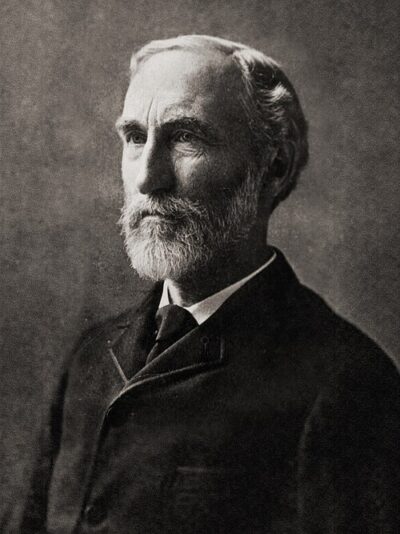
- Josiah Willard Gibbs
- Wikipedias with a page
- 18
Wikidata item Q5374 (wikidata.org/wiki/Q5374), public domain (CC0). Copied 2026-11-16.
What Wikipedia says · copied November 16, 2026 · revision 1378651518
In mathematics, the Gibbs phenomenon is the oscillatory behavior of the Fourier series of a piecewise continuously differentiable periodic function around a jump discontinuity. The Nth partial Fourier series of the function (formed by summing the N lowest constituent sinusoids of the Fourier series of the function) produces large peaks around the jump which overshoot and undershoot the function values. As more sinusoids are used, this approximation error approaches a limit of about 9% of the jump, though the infinite Fourier series sum does eventually converge almost everywhere.
The Gibbs phenomenon was observed by experimental physicists and was believed to be due to imperfections in the measuring apparatus, but it is in fact a mathematical result. It is one cause of ringing artifacts in signal processing. It is named after Josiah Willard Gibbs.
From the Wikipedia article “Gibbs phenomenon” (en.wikipedia.org/wiki/Gibbs_phenomenon), by its contributors, under CC BY-SA 4.0 (creativecommons.org/licenses/by-sa/4.0/). Copied 2026-11-16; not changed.
Confirmed Two sources agree. Cited One source, and it names where it got it. One source One source, without a reference of its own. Sources disagree The sources disagree. We show the best-supported value and keep theirs below.
Picture: Wikimedia Commons: Gibbs phenomenon 50.svg · See Commons file page