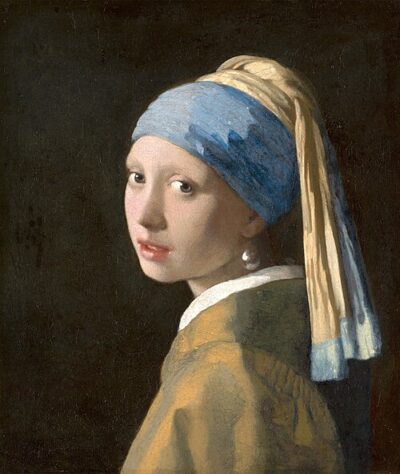
Girl with a Pearl Earring
Girl with a Pearl Earring is a painting by Johannes Vermeer. It came out in 1665.
- Came out
- 1665
- Created by
- Johannes Vermeer
- Genre
- tronie
All 7 facts, and where they come from
Facts
7 facts · 0 confirmed by two sources · 4 cited · 3 from one source
Where this comes from
Papalocal keeps its own record. It started from these sources; what each one said is kept here as it was copied, so a change on their side never changes this page by itself. Tap one to read its version.
What Wikidata says · copied November 17, 2026 · revision 2570333549
- Described as
- painting by Johannes Vermeer
- Other names
- Girl with a Pearl Earring by Johannes Vermeer, Girl with a Pearl Earring Johannes Vermeer, Girl with a Pearl Earring (Johannes Vermeer)
- What it is
- painting · 1 reference
- Created by
- Johannes Vermeer
- Genre
- tronie
- Came out
- 1665 · 1 reference
- Country
- Netherlands
- Owned by
- Pieter van Ruijven (–1674) · 1 reference; Magdalena van Ruijven (1681–1682) · 1 reference
- Wikipedias with a page
- 72
Wikidata item Q185372 (wikidata.org/wiki/Q185372), public domain (CC0). Copied 2026-11-17.
What Wikipedia says · copied November 17, 2026 · revision 1385031444
Girl with a Pearl Earring (Dutch: Meisje met de parel) is an oil painting by Dutch Golden Age painter Johannes Vermeer, dated c. 1665. Going by various names over the centuries, it acquired its present title towards the end of the 20th century. The work has been in the collection of the Mauritshuis in The Hague since 1902 and has been the subject of various literary and cinematic treatments.
From the Wikipedia article “Girl with a Pearl Earring” (en.wikipedia.org/wiki/Girl_with_a_Pearl_Earring), by its contributors, under CC BY-SA 4.0 (creativecommons.org/licenses/by-sa/4.0/). Copied 2026-11-17; not changed.
Confirmed Two sources agree. Cited One source, and it names where it got it. One source One source, without a reference of its own. Sources disagree The sources disagree. We show the best-supported value and keep theirs below.
Picture: Johannes Vermeer, via Wikimedia Commons · Public domain