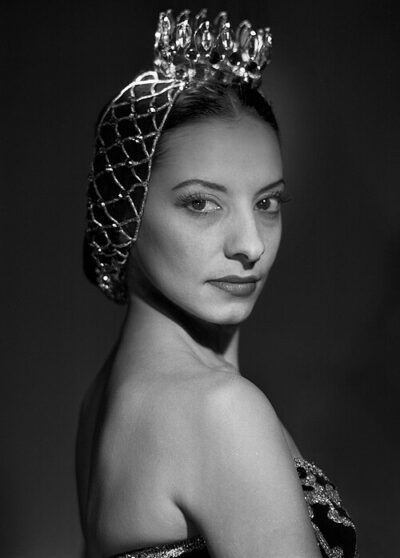
Giselle
Giselle is a ballet by Adolphe Adam.
- Genre
- ballet
All 4 facts, and where they come from
Facts
4 facts · 0 confirmed by two sources · 2 cited · 2 from one source
Where this comes from
Papalocal keeps its own record. It started from these sources; what each one said is kept here as it was copied, so a change on their side never changes this page by itself. Tap one to read its version.
What Wikidata says · copied November 17, 2026 · revision 2567224519
- Described as
- ballet by Adolphe Adam
- Other names
- Gizelle, Giselle, or the Willis
- What it is
- dramatico-musical work
- Music by
- Adolphe Adam · 1 reference
- Genre
- ballet · 1 reference
- Language
- French
- Wikipedias with a page
- 42
Wikidata item Q827436 (wikidata.org/wiki/Q827436), public domain (CC0). Copied 2026-11-17.
What Wikipedia says · copied November 17, 2026 · revision 1368453013
Giselle ( jiz-EL, French: [ʒizɛl] ), originally titled Giselle, ou les Wilis (French: [ʒizɛl u le vili]; Giselle, or The Wilis), is a romantic ballet (ballet-pantomime) in two acts with music by Adolphe Adam. Considered a masterwork in the classical ballet performance canon, it was first performed by the Ballet du Théâtre de l'Académie Royale de Musique at the Salle Le Peletier in Paris on 28 June 1841, with Italian ballerina Carlotta Grisi as Giselle. It became hugely popular and was subsequently staged across Europe, Russia and the United States.
The ghost-filled ballet tells the tragic, romantic story of a beautiful young peasant girl named Giselle and a disguised nobleman named Albrecht, who fall in love, but when his true identity is revealed by his rival, Hilarion, Giselle goes mad and dies of heartbreak. After her death, she is summoned from her grave into the vengeful, deadly sisterhood of the Wilis, the ghosts of unmarried women who died after being betrayed by their lovers and take revenge in the night by dancing men to death by exhaustion (a popular theme in Romantic-era ballets). Led by Myrtha, the Queen of the Wilis, they target Albrecht when he comes to mourn at Giselle's grave, but her great love frees him from their grasp. They gain their power in numbers as they effortlessly move through dramatic patterns and synchronized movements and control the stage with their long tulle dresses and stoic expressions, creating an ethereal atmosphere that builds as they gradually close in on Albrecht. By saving him from the Wilis, Giselle also saves herself from becoming one of them.
Librettists Jules-Henri Vernoy de Saint-Georges and Théophile Gautier took their inspiration for the plot from a prose passage about the Wilis in De l'Allemagne, by Heinrich Heine, and from a poem called "Fantômes" in Les Orientales by Victor Hugo.
Jean Coralli and Jules Perrot created the original choreography. The role of Giselle was created for Carlotta Grisi as her debut piece for the Paris public, and she was the only ballerina to dance it at the Paris Opera for many years. The traditional choreography that has been passed down to the present day derives primarily from the revivals staged by Marius Petipa during the late 19th and early 20th centuries for the Imperial Ballet in Saint Petersburg. One of the world's most-often performed classical ballets, it is also one of the most challenging to dance.
From the Wikipedia article “Giselle” (en.wikipedia.org/wiki/Giselle), by its contributors, under CC BY-SA 4.0 (creativecommons.org/licenses/by-sa/4.0/). Copied 2026-11-17; not changed.
Confirmed Two sources agree. Cited One source, and it names where it got it. One source One source, without a reference of its own. Sources disagree The sources disagree. We show the best-supported value and keep theirs below.
Picture: Wikimedia Commons: Adolphe Charles Adam portrait (9607018730).jpg · See Commons file page