Goddard Institute for Space Studies
Goddard Institute for Space Studies is a unit of NASA's Goddard Space Flight Center and of Columbia University's Earth Institute. It was founded in 1961 by Robert Jastrow. Its headquarters are in New York City.
- Founded
- May 1961
- Founded by
- Robert Jastrow
- Headquarters
- New York City
- Country
- United States
All 12 facts, and where they come from
Facts
12 facts · 0 confirmed by two sources · 1 cited · 11 from one source
Where this comes from
Papalocal keeps its own record. It started from these sources; what each one said is kept here as it was copied, so a change on their side never changes this page by itself. Tap one to read its version.
What Wikidata says · copied November 17, 2026 · revision 2545432923
- Described as
- unit of NASA's Goddard Space Flight Center and of Columbia University's Earth Institute
- Other names
- NASA Goddard Institute for Space Studies, NASA-GISS, GISS
- What it is
- laboratory
- Founded
- May 1961
- Founded by
- Robert Jastrow
- Headquarters
- New York City · 1 reference
- Located in
- Manhattan
- Country
- United States
- Part of
- Columbia University · 1 reference; Goddard Space Flight Center · 2 references
- Field
- atmosphere; climate change
- Named after
- Robert H. Goddard
- Official website
- https://www.giss.nasa.gov
- Wikipedias with a page
- 17
Wikidata item Q422272 (wikidata.org/wiki/Q422272), public domain (CC0). Copied 2026-11-17.
What Wikipedia says · copied November 17, 2026 · revision 1383322375
The Goddard Institute for Space Studies (GISS) is a laboratory in the Earth Sciences Division of NASA's Goddard Space Flight Center affiliated with the Columbia University Earth Institute. The institute is located at Columbia University in New York City. It was named after Robert H. Goddard, American engineer, professor, physicist and inventor who is credited with creating and building the world's first liquid-fueled rocket.
Research at the GISS emphasizes a broad study of global change, the natural and anthropogenic changes in our environment that affect the habitability of our planet. These effects may occur on greatly differing time scales, from one-time forcings such as volcanic explosions, to seasonal/annual effects such as El Niño, and on up to the millennia of ice ages.
The institute's research combines analysis of comprehensive global datasets (derived from surface stations combined with satellite data for sea surface temperatures) with global models of atmospheric, land surface, and oceanic processes. Study of past climate change on Earth and of other planetary atmospheres provides an additional tool in assessing general understanding of the atmosphere and its evolution.
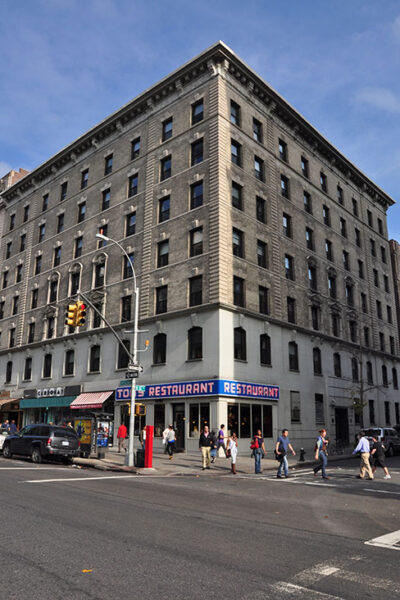
GISS was established in May 1961 by Robert Jastrow to do basic research in space sciences in support of Goddard programs. Formally the institute was the New York City office of the GSFC Theoretical Division but was known as the Goddard Space Flight Center Institute for Space Studies or in some publications as simply the Institute for Space Studies. But even before it opened, the institute had been referred to in the press as the Goddard Institute for Space Studies. It was separated from the Theoretical Division in July 1962. Its offices were originally located in The Interchurch Center, and the institute moved into Columbia's Armstrong Hall (a renovated apartment building previously known as the Ostend apartments and subsequently the Oxford Residence Hotel) in April 1966.
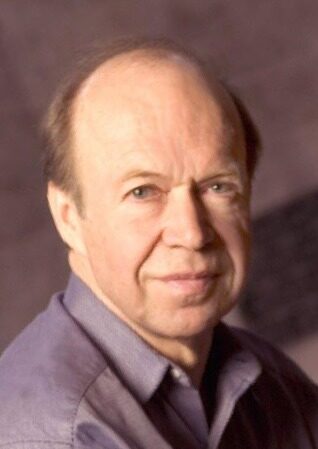
From 1981 to 2013, GISS was directed by James E. Hansen. In June 2014, Gavin A. Schmidt was named the institute's third director.
On April 25, 2025, NASA announced that it was cancelling the lease on the Armstrong Hall as part of the Trump administration's review of federal leases. Since June 1, 2025, GISS personnel have been working remotely.
From the Wikipedia article “Goddard Institute for Space Studies” (en.wikipedia.org/wiki/Goddard_Institute_for_Space_Studies), by its contributors, under CC BY-SA 4.0 (creativecommons.org/licenses/by-sa/4.0/). Copied 2026-11-17; not changed.
Confirmed Two sources agree. Cited One source, and it names where it got it. One source One source, without a reference of its own. Sources disagree The sources disagree. We show the best-supported value and keep theirs below.
Picture: NASA Goddard Space Flight Center/Robert Schmunk, via Wikimedia Commons · Public domain