Gospel of Marcion
Gospel of Marcion is a c. 140 CE Christian text.
- Published
- 140
- Genre
- apocryphal gospel
All 5 facts, and where they come from
Facts
5 facts · 0 confirmed by two sources · 0 cited · 5 from one source
Where this comes from
Papalocal keeps its own record. It started from these sources; what each one said is kept here as it was copied, so a change on their side never changes this page by itself. Tap one to read its version.
What Wikidata says · copied November 17, 2026 · revision 2502955493
- Described as
- c. 140 CE Christian text
- Other names
- Gospel of the Lord, Marcion's Gospel
- What it is
- New Testament apocrypha; literary work
- Genre
- apocryphal gospel
- Published
- 140
- Language
- Koine Greek
- Wikipedias with a page
- 17
Wikidata item Q779950 (wikidata.org/wiki/Q779950), public domain (CC0). Copied 2026-11-17.
What Wikipedia says · copied November 17, 2026 · revision 1381609653
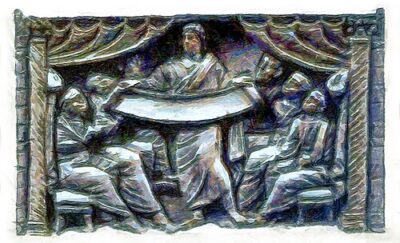
The Gospel of Marcion, called by its adherents the Gospel of the Lord, or more commonly the Gospel (Evangelion), was a text used by the mid-2nd-century Christian teacher Marcion of Sinope to the exclusion of the other gospels. The majority of scholars agree that this gospel was a later revised version of the Gospel of Luke.
There are debates as to whether several verses of Marcion's gospel are attested firsthand in a manuscript in Papyrus 69, a hypothesis proposed by Claire Clivaz and put into practice by Jason BeDuhn. Thorough, meticulous, yet highly divergent reconstructions of much or all of the content of the Gospel of Marcion have been made by several scholars, including August Hahn (1832), Theodor Zahn (1892), Adolf von Harnack (1921), Kenji Tsutsui (1992), Jason BeDuhn (2013), Dieter T. Roth (2015), Matthias Klinghardt (2015/2020, 2021), and Andrea Nicolotti (2019).
From the Wikipedia article “Gospel of Marcion” (en.wikipedia.org/wiki/Gospel_of_Marcion), by its contributors, under CC BY-SA 4.0 (creativecommons.org/licenses/by-sa/4.0/). Copied 2026-11-17; not changed.
Confirmed Two sources agree. Cited One source, and it names where it got it. One source One source, without a reference of its own. Sources disagree The sources disagree. We show the best-supported value and keep theirs below.