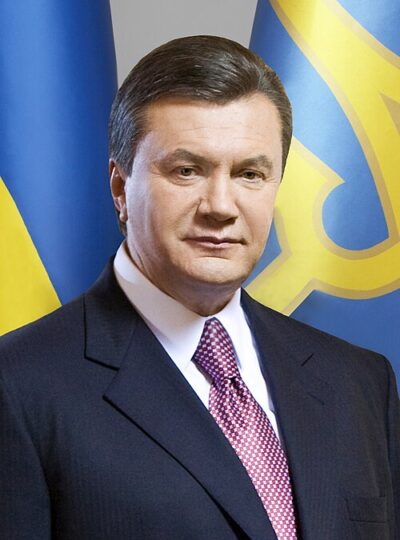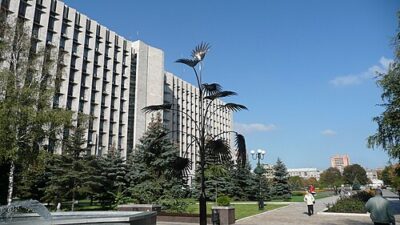
Governor of Donetsk Oblast
Governor of Donetsk Oblast is a chief executive of Donetsk Oblast, Ukraine. It was created in 2015. Its headquarters are in Kramatorsk.
- Office of
- Donetsk Oblast
- Country
- Ukraine
- Created
- March 5, 2015
All 8 facts, and where they come from
Facts
8 facts · 0 confirmed by two sources · 0 cited · 8 from one source
Where this comes from
Papalocal keeps its own record. It started from these sources; what each one said is kept here as it was copied, so a change on their side never changes this page by itself. Tap one to read its version.
What Wikidata says · copied November 17, 2026 · revision 2554570973
- Described as
- chief executive of Donetsk Oblast, Ukraine
- What it is
- regional state administration
- Created
- March 5, 2015
- Headquarters
- Kramatorsk
- Country
- Ukraine
- Chair
- Yurii Smyrnov (1991–1994) · 1 reference; Volodymyr Shcherban (1995–1996) · 1 reference
- Office of
- Donetsk Oblast
- Official website
- http://dn.gov.ua
- Wikipedias with a page
- 6
Wikidata item Q4166196 (wikidata.org/wiki/Q4166196), public domain (CC0). Copied 2026-11-17.
What Wikipedia says · copied November 17, 2026 · revision 1373666130
The governor of Donetsk Oblast is the head of executive branch for the Donetsk Oblast. Due to the current Russo-Ukrainian War Donetsk Oblast is, since 5 March 2015, assigned as a civil–military administration. Hence the governor of Donetsk Oblast is officially called Head of the Donetsk Regional Military Civil Administration.
The office of governor is an appointed position, with officeholders being appointed by the President of Ukraine, on recommendation from the Prime Minister of Ukraine, to serve a four-year term.
The official residence for the governor is located in Donetsk, but was relocated to Kramatorsk in 2014 due to the war in Donbas.
From the Wikipedia article “Governor of Donetsk Oblast” (en.wikipedia.org/wiki/Governor_of_Donetsk_Oblast), by its contributors, under CC BY-SA 4.0 (creativecommons.org/licenses/by-sa/4.0/). Copied 2026-11-17; not changed.
Confirmed Two sources agree. Cited One source, and it names where it got it. One source One source, without a reference of its own. Sources disagree The sources disagree. We show the best-supported value and keep theirs below.
Picture: Brücke-Osteuropa, via Wikimedia Commons · Public domain