Graeffe's method
Graeffe's method is an Algorithm for finding polynomial roots.
All 3 facts, and where they come from
Facts
3 facts · 0 confirmed by two sources · 0 cited · 3 from one source
Where this comes from
Papalocal keeps its own record. It started from these sources; what each one said is kept here as it was copied, so a change on their side never changes this page by itself. Tap one to read its version.
What Wikidata says · copied November 17, 2026 · revision 2351186568
- Described as
- Algorithm for finding polynomial roots
- What it is
- root-finding algorithm
- Named after
- Karl Heinrich Gräffe; Germinal Pierre Dandelin
- Wikipedias with a page
- 6
Wikidata item Q5592179 (wikidata.org/wiki/Q5592179), public domain (CC0). Copied 2026-11-17.
What Wikipedia says · copied November 17, 2026 · revision 1236364427
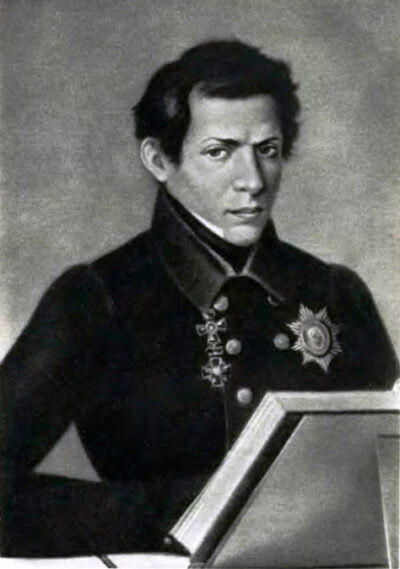
In mathematics, Graeffe's method or Dandelin–Lobachesky–Graeffe method is an algorithm for finding all of the roots of a polynomial. It was developed independently by Germinal Pierre Dandelin in 1826 and Lobachevsky in 1834. In 1837 Karl Heinrich Gräffe also discovered the principal idea of the method. The method separates the roots of a polynomial by squaring them repeatedly. This squaring of the roots is done implicitly, that is, only working on the coefficients of the polynomial. Finally, Viète's formulas are used in order to approximate the roots.
From the Wikipedia article “Graeffe's method” (en.wikipedia.org/wiki/Graeffe's_method), by its contributors, under CC BY-SA 4.0 (creativecommons.org/licenses/by-sa/4.0/). Copied 2026-11-17; not changed.
Confirmed Two sources agree. Cited One source, and it names where it got it. One source One source, without a reference of its own. Sources disagree The sources disagree. We show the best-supported value and keep theirs below.