Gran Colombia
Gran Colombia is a republic in South and Central America from 1819 to 1831.
- Founded
- 1819
- Country
- Gran Colombia
All 5 facts, and where they come from
Facts
5 facts · 0 confirmed by two sources · 0 cited · 5 from one source
Where this comes from
Papalocal keeps its own record. It started from these sources; what each one said is kept here as it was copied, so a change on their side never changes this page by itself. Tap one to read its version.
What Wikidata says · copied November 18, 2026 · revision 2565525938
- Described as
- republic in South and Central America from 1819 to 1831
- Other names
- Great Colombia
- What it is
- sovereign state (1821–1831); historical country (1831–)
- Founded
- 1819
- Ended
- 1831
- Country
- Gran Colombia
- Wikipedias with a page
- 75
Wikidata item Q199821 (wikidata.org/wiki/Q199821), public domain (CC0). Copied 2026-11-18.
What Wikipedia says · copied November 18, 2026 · revision 1375026848
Gran Colombia (Spanish pronunciation: [ˈɡɾaŋ koˈlombja] , "Great Colombia"), also known as Greater Colombia and officially the Republic of Colombia (Spanish: República de Colombia), was the Colombian state that encompassed much of northern South America and parts of Central America from 1819 to 1831. It included present-day Colombia, mainland Ecuador, Panama, Venezuela, parts of northern Peru, northwestern Brazil, and claimed the Essequibo region. The terms Gran Colombia and Greater Colombia are used historiographically to distinguish it from the current Republic of Colombia, which is also the official name of the former state.
International recognition of the legitimacy of the Gran Colombian state ran afoul of European opposition to the independence of states in the Americas. Austria, France, and the Russian Empire only recognized independence in the Americas if the new states accepted monarchs from European royal houses. In addition, Colombia and the international powers disagreed over the extension of the Colombian territory and its boundaries.
Gran Colombia was proclaimed through the Fundamental Law of the Republic of Colombia, issued during the Congress of Angostura (1819), but did not come into being until the Congress of Cúcuta (1821) promulgated the Constitution of Cúcuta. It was constituted as a unitary centralist state. Its existence was marked by a struggle between those who supported a centralized government with a strong presidency and those who supported a decentralized, federal form of government. At the same time, another political division emerged between those who supported the Constitution of Cúcuta and two groups who sought to do away with the Constitution, either in favor of breaking up the country into smaller republics or maintaining the union but creating an even stronger presidency. The faction that favored constitutional rule coalesced around Vice-President Francisco de Paula Santander, while those who supported the creation of a stronger presidency were led by President Simón Bolívar. They had united in their fight against Spanish rule, but by 1825, their public differences contributed to political instability.
Gran Colombia was dissolved in 1831 due to the political differences that existed between supporters of federalism and centralism, as well as regional tensions among the peoples that made up the republic. It broke into the successor states of Colombia, Ecuador, and Venezuela; Panama was separated from Colombia in 1903. Since Gran Colombia's territory corresponded more or less to the original jurisdiction of the former Viceroyalty of New Granada, it also claimed the southeastern part of the Mosquito Shore, as well as most of Esequiba.
From the Wikipedia article “Gran Colombia” (en.wikipedia.org/wiki/Gran_Colombia), by its contributors, under CC BY-SA 4.0 (creativecommons.org/licenses/by-sa/4.0/). Copied 2026-11-18; not changed.
Confirmed Two sources agree. Cited One source, and it names where it got it. One source One source, without a reference of its own. Sources disagree The sources disagree. We show the best-supported value and keep theirs below.
People connected 5
Citizen of
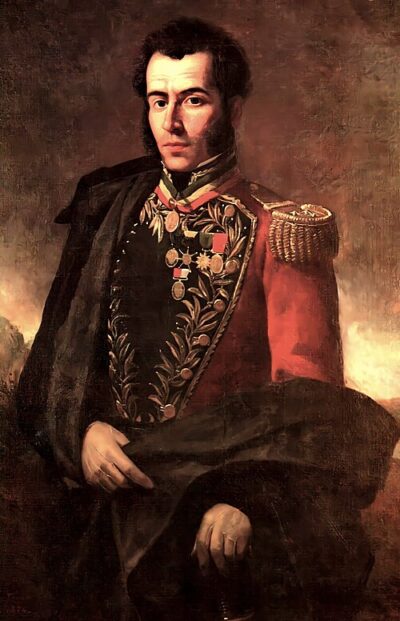 Antonio José de SucreVenezuelan military and politician (1795–1830)
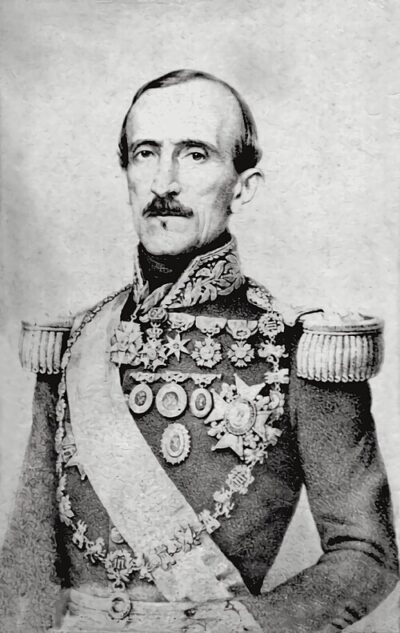 Juan José Flores (1819–1830)president of Ecuador (1800–1864)
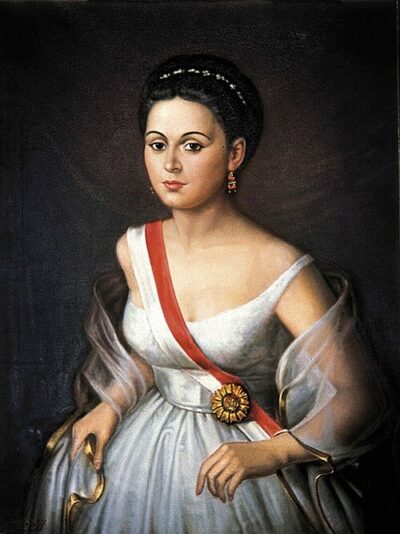 Manuela SáenzEcuadorian revolutionary heroine (1797-1856)
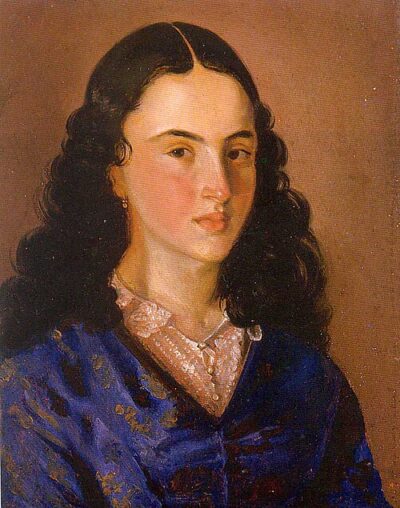 Policarpa Salavarrietaheroine of the Colombian Independence Movement (1795–1817)