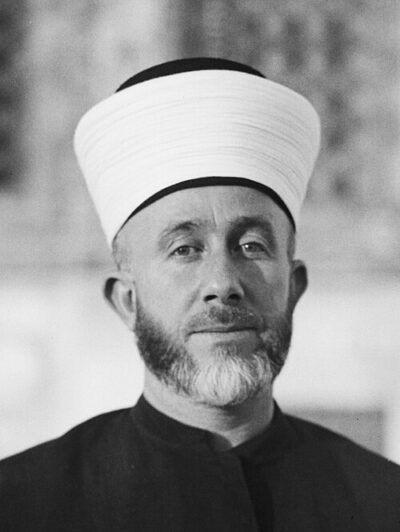
Grand Mufti
Grand Mufti is a higher spiritual position of Muslim Ummah.
All 2 facts, and where they come from
Facts
2 facts · 0 confirmed by two sources · 0 cited · 2 from one source
Where this comes from
Papalocal keeps its own record. It started from these sources; what each one said is kept here as it was copied, so a change on their side never changes this page by itself. Tap one to read its version.
What Wikidata says · copied November 17, 2026 · revision 2563281137
- Described as
- higher spiritual position of Muslim Ummah
- What it is
- position; Islamic religious occupation
- Wikipedias with a page
- 26
Wikidata item Q2538679 (wikidata.org/wiki/Q2538679), public domain (CC0). Copied 2026-11-17.
What Wikipedia says · copied November 17, 2026 · revision 1385832545
A Grand Mufti (also called Chief Mufti, State Mufti and Supreme Mufti) is a title for the leading Islamic jurist of a country or grand muftiate, typically Sunni, who may oversee other muftis. Not all countries with large Sunni Muslim populations have Grand Muftis; in those that do, the Grand Mufti is typically appointed by the state or elected by a council of scholars. The office originated in the early modern era in the Ottoman Empire and has been later adopted in a number of countries that were never part of the Ottoman Empire.
Muftis are Islamic jurists qualified to issue a nonbinding opinion (fatwa) on a point of Islamic law (sharia). In the 15th century, muftis of the Ottoman Empire, who had acted as independent scholars in earlier times, began to be integrated into a hierarchical bureaucracy of religious institutions and scholars. By the end of the 16th century, the government-appointed mufti of Istanbul came to be recognized under the title Shaykh al-Islam (Turkish: şeyhülislam) as the Grand Mufti in charge of this hierarchy. The Ottoman Grand Mufti performed a number of functions, including advising the sultan on religious matters, legitimizing government policies, and appointing judges. After the dissolution of the Ottoman Empire, the office of the Grand Mufti was adopted in a number of countries across the Muslim world, often serving the role of providing religious support for government policies.
From the Wikipedia article “Grand Mufti” (en.wikipedia.org/wiki/Grand_Mufti), by its contributors, under CC BY-SA 4.0 (creativecommons.org/licenses/by-sa/4.0/). Copied 2026-11-17; not changed.
Confirmed Two sources agree. Cited One source, and it names where it got it. One source One source, without a reference of its own. Sources disagree The sources disagree. We show the best-supported value and keep theirs below.
Picture: Wikimedia Commons: Sheikh Abubakr Ahmad (cropped).jpg · See Commons file page