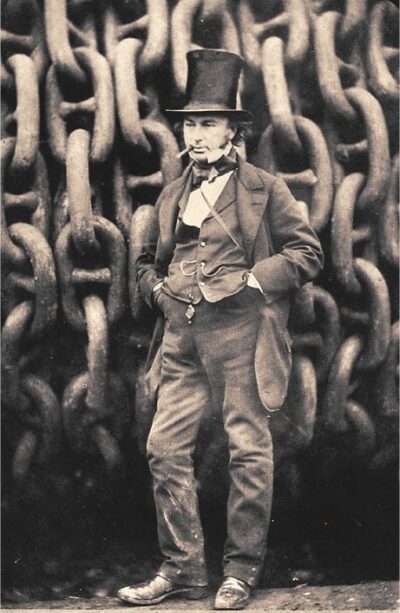
Great Western Railway
Great Western Railway is a British railway company (1833–1947). Its headquarters are in London Paddington station.
- Came out
- 1833
All 7 facts, and where they come from
Facts
7 facts · 0 confirmed by two sources · 1 cited · 6 from one source
Where this comes from
Papalocal keeps its own record. It started from these sources; what each one said is kept here as it was copied, so a change on their side never changes this page by itself. Tap one to read its version.
What Wikidata says · copied November 17, 2026 · revision 2562106414
- Described as
- British railway company (1833–1947)
- Other names
- GWR, the GWR, Great Western Railway Company
- What it is
- railway company
- Came out
- 1833
- Ended
- 1948
- Founded by
- Isambard Kingdom Brunel
- Headquarters
- London Paddington station
- Country
- United Kingdom
- Industry
- rail transport · 1 reference
- Wikipedias with a page
- 25
Wikidata item Q843251 (wikidata.org/wiki/Q843251), public domain (CC0). Copied 2026-11-17.
What Wikipedia says · copied November 17, 2026 · revision 1379767737
The Great Western Railway (GWR) was a British railway company that linked London with the southwest, west and West Midlands of England and most of Wales. It was founded in 1833, received its enabling act of Parliament on 31 August 1835 and ran its first trains in 1838 with the initial route completed between London and Bristol in 1841. It was engineered by Isambard Kingdom Brunel, who chose a broad gauge of 7 ft (2,134 mm)—later slightly widened to 7 ft 1⁄4 in (2,140 mm)—but, from 1854, a series of amalgamations saw it also operate 4 ft 8+1⁄2 in (1,435 mm) standard gauge trains; the last broad-gauge services were operated in 1892.
The GWR was the only company to keep its identity through the Railways Act 1921, which amalgamated it with the remaining independent railways within its territory, and it was finally merged at the end of 1947 when it was nationalised and became the Western Region of British Railways.
The GWR was called by some "God's Wonderful Railway" and by others the "Great Way Round" but it was famed as the "Holiday Line", taking many people to English and Bristol Channel resorts in the West Country as well as the far southwest of England such as Torquay in Devon, Minehead in Somerset, and Newquay and St Ives in Cornwall. The company's locomotives, many of which were built in the company's workshops at Swindon, were painted a middle chrome green colour while, for most of its existence, it used a two-tone "chocolate and cream" livery for its passenger coaches. Goods wagons were painted red but this was later changed to mid-grey.
Great Western trains included long-distance express services such as the Flying Dutchman, the Cornish Riviera Express and the Cheltenham Spa Express. It also operated many suburban and rural services, some operated by steam rail motors or autotrains. The company pioneered the use of larger, more economic goods wagons than were usual in Britain. It ran ferry services to Ireland and the Channel Islands, operated a network of road motor (bus) routes, was a part of the Railway Air Services, and owned ships, canals, docks and hotels.
From the Wikipedia article “Great Western Railway” (en.wikipedia.org/wiki/Great_Western_Railway), by its contributors, under CC BY-SA 4.0 (creativecommons.org/licenses/by-sa/4.0/). Copied 2026-11-17; not changed.
Confirmed Two sources agree. Cited One source, and it names where it got it. One source One source, without a reference of its own. Sources disagree The sources disagree. We show the best-supported value and keep theirs below.