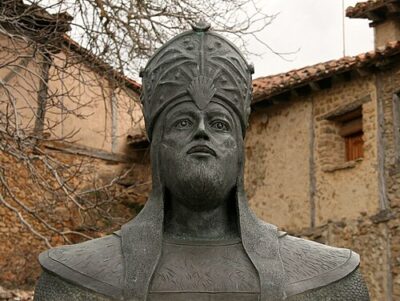
hajib
Hajib is a court official in early Muslim world.
All 1 facts, and where they come from
Facts
1 facts · 0 confirmed by two sources · 0 cited · 1 from one source
Where this comes from
Papalocal keeps its own record. It started from these sources; what each one said is kept here as it was copied, so a change on their side never changes this page by itself. Tap one to read its version.
What Wikidata says · copied November 17, 2026 · revision 2570075538
- Described as
- court official in early Muslim world
- What it is
- position
- Wikipedias with a page
- 21
Wikidata item Q2357175 (wikidata.org/wiki/Q2357175), public domain (CC0). Copied 2026-11-17.
What Wikipedia says · copied November 17, 2026 · revision 1382957362
Hajib or hadjib (Arabic: الحاجب, romanized: al-ḥājib, [æl ˈħæːdʒib]) was a court official, equivalent to a chamberlain, in the early Muslim world, which evolved to fulfil various functions, often serving as chief ministers or enjoying dictatorial powers. The post appeared under the Umayyad Caliphate, but gained in influence and prestige in the more settled court of the Abbasids, under whom it ranked as one of the senior offices of the state, alongside the vizier. From the early caliphates, the post spread to other areas under Muslim dominion: in al-Andalus the hajib was always superior to the vizier and by the 10th century had come to wield enormous power as a de facto chancellor; in the eastern dynasties, the Samanids, Buyids and Ghaznavids, the title acquired a mainly military role; under the Seljuks, Ilkhanids and Timurids it reverted to its role as a court official; in Fatimid Egypt, the chief hajib, styled sahib al-bab ('Master of the Gate') or hajib al-hujjab ('chamberlain of chamberlains, head chamberlain') was also an important official; under the Mamluks, they acquired important judicial duties.
From the Wikipedia article “Hajib” (en.wikipedia.org/wiki/Hajib), by its contributors, under CC BY-SA 4.0 (creativecommons.org/licenses/by-sa/4.0/). Copied 2026-11-17; not changed.
Confirmed Two sources agree. Cited One source, and it names where it got it. One source One source, without a reference of its own. Sources disagree The sources disagree. We show the best-supported value and keep theirs below.