Hamiltonian path
Hamiltonian path is a path in a graph that visits each vertex exactly once.
All 1 facts, and where they come from
Facts
1 facts · 0 confirmed by two sources · 0 cited · 1 from one source
Where this comes from
Papalocal keeps its own record. It started from these sources; what each one said is kept here as it was copied, so a change on their side never changes this page by itself. Tap one to read its version.
What Wikidata says · copied November 17, 2026 · revision 2463189899
- Described as
- path in a graph that visits each vertex exactly once
- Other names
- Hamilton path, traceable path
- Named after
- William Rowan Hamilton
- Wikipedias with a page
- 34
Wikidata item Q273037 (wikidata.org/wiki/Q273037), public domain (CC0). Copied 2026-11-17.
What Wikipedia says · copied November 17, 2026 · revision 1361551365
In the mathematical field of graph theory, a Hamiltonian path (or traceable path) is a path in an undirected or directed graph that visits each vertex exactly once. A Hamiltonian cycle (or Hamiltonian circuit) is a cycle that visits each vertex exactly once. A Hamiltonian path that starts and ends at adjacent vertices can be completed by adding one more edge to form a Hamiltonian cycle, and removing any edge from a Hamiltonian cycle produces a Hamiltonian path. The computational problems of determining whether such paths and cycles exist in graphs are NP-complete; see Hamiltonian path problem for details.
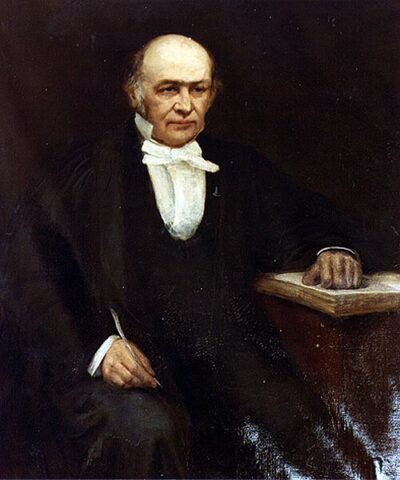
Hamiltonian paths and cycles are named after William Rowan Hamilton, who invented the icosian game, now also known as Hamilton's puzzle, which involves finding a Hamiltonian cycle in the edge graph of the dodecahedron. Hamilton solved this problem using the icosian calculus, an algebraic structure based on roots of unity with many similarities to the quaternions (also invented by Hamilton). This solution does not generalize to arbitrary graphs.
Despite being named after Hamilton, Hamiltonian cycles in polyhedra had also been studied a year earlier by Thomas Kirkman, who, in particular, gave an example of a polyhedron without Hamiltonian cycles. Even earlier, Hamiltonian cycles and paths in the knight's graph of the chessboard, the knight's tour, had been studied in the 9th century in Indian mathematics by Rudrata, and around the same time in Islamic mathematics by al-Adli ar-Rumi. In 18th century Europe, knight's tours were published by Abraham de Moivre and Leonhard Euler.
From the Wikipedia article “Hamiltonian path” (en.wikipedia.org/wiki/Hamiltonian_path), by its contributors, under CC BY-SA 4.0 (creativecommons.org/licenses/by-sa/4.0/). Copied 2026-11-17; not changed.
Confirmed Two sources agree. Cited One source, and it names where it got it. One source One source, without a reference of its own. Sources disagree The sources disagree. We show the best-supported value and keep theirs below.
Picture: Wikimedia Commons: Hamilton path.gif · See Commons file page