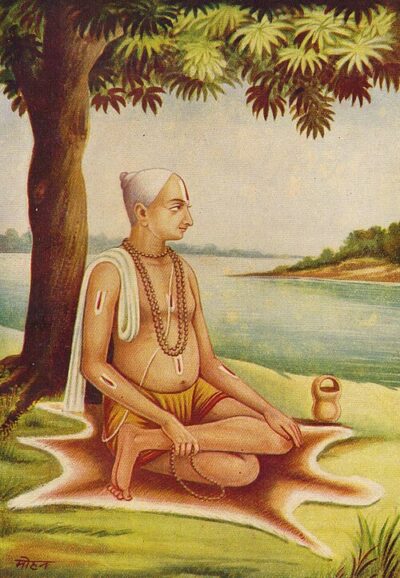
Hanuman Chalisha
Hanuman Chalisha is a Hindu devotional hymn by Tulsidas dedicated to lord Hanuman.
All 8 facts, and where they come from
Facts
8 facts · 0 confirmed by two sources · 0 cited · 8 from one source
Where this comes from
Papalocal keeps its own record. It started from these sources; what each one said is kept here as it was copied, so a change on their side never changes this page by itself. Tap one to read its version.
What Wikidata says · copied November 17, 2026 · revision 2550194298
- Described as
- Hindu devotional hymn by Tulsidas dedicated to lord Hanuman
- Other names
- Forty chaupais on Hanuman, Hanumāna Chālisā, Hanumana Chalisa
- What it is
- hymn; devotional song; Hindu text
- Written by
- Tulsidas
- Genre
- poetry
- Released
- 16th century
- Language
- Awadhi
- Country of origin
- India
- Wikipedias with a page
- 26
Wikidata item Q2663608 (wikidata.org/wiki/Q2663608), public domain (CC0). Copied 2026-11-17.
What Wikipedia says · copied November 17, 2026 · revision 1384143998
The Hanuman Chalisa (Hindi: हनुमान चालीसा; Hindi pronunciation: [ɦənʊmaːn tʃaːliːsaː]; Forty chaupais on Hanuman) is a Hindu devotional hymn (stotra) in praise of Hanuman, and regularly recited by Hindus. It was written by Tulsidas in the Awadhi language and is the best known text from the Ramcharitmanas.
Hanuman is a Hindu deity and a devotee of the Hindu god, Rama. He is one of the central characters of the Ramayana. According to the Shaiva tradition, he is also an incarnation of Shiva. The Hanuman Chalisa praises the power and other qualities of Hanuman including his strength, courage, wisdom, celibacy (brahmacharya), and devotion to Rama.
From the Wikipedia article “Hanuman Chalisa” (en.wikipedia.org/wiki/Hanuman_Chalisa), by its contributors, under CC BY-SA 4.0 (creativecommons.org/licenses/by-sa/4.0/). Copied 2026-11-17; not changed.
Confirmed Two sources agree. Cited One source, and it names where it got it. One source One source, without a reference of its own. Sources disagree The sources disagree. We show the best-supported value and keep theirs below.
Picture: Wikimedia Commons: Hanuman Chalisa 4x3.jpg · See Commons file page