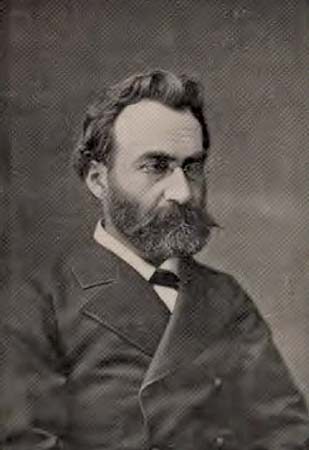
Harem
Harem is a 1874 novel by Raffi.
- Published
- 1874
- Written by
- Raffi
- Country of origin
- Russian Empire
All 5 facts, and where they come from
Facts
5 facts · 0 confirmed by two sources · 0 cited · 5 from one source
Where this comes from
Papalocal keeps its own record. It started from these sources; what each one said is kept here as it was copied, so a change on their side never changes this page by itself. Tap one to read its version.
What Wikidata says · copied November 18, 2026 · revision 2344303623
- Described as
- 1874 novel by Raffi
- What it is
- literary work
- Written by
- Raffi
- Published
- 1874
- Language
- Armenian · 1 reference
- Country of origin
- Russian Empire
- Wikipedias with a page
- 2
Wikidata item Q21211975 (wikidata.org/wiki/Q21211975), public domain (CC0). Copied 2026-11-18.
What Wikipedia says · copied November 18, 2026 · revision 1384418639
Harem (Armenian: Հարեմ) is an Armenian-language novella by the Armenian novelist Raffi. The first part of the work was published in the book P’unj in 1874; the first and second parts were published together for the first time in the book Vepikner yev patkerner in 1891, three years after Raffi's death.
The book is set in the royal harem of the prince of Persia the 19th century, probably after the Russo-Persian War (1804-1813). Two of the characters in the book, the Prince and Zeynep, have real-life analogues in Fath-Ali Shah Qajar, and one of his 165 consorts, an Armenian from Tiflis who was given the name Gul-Pirhan. Raffi's adversaries translated Harem to Persian in 1876 and took it to Mozaffar ad-Din Shah Qajar, who at the time was the governor of the province where Raffi was living in Tabriz, when the reaction of Raffi's adversaries caused his exile from Agulis.
From the Wikipedia article “Harem (novel)” (en.wikipedia.org/wiki/Harem_(novel)), by its contributors, under CC BY-SA 4.0 (creativecommons.org/licenses/by-sa/4.0/). Copied 2026-11-18; not changed.
Confirmed Two sources agree. Cited One source, and it names where it got it. One source One source, without a reference of its own. Sources disagree The sources disagree. We show the best-supported value and keep theirs below.