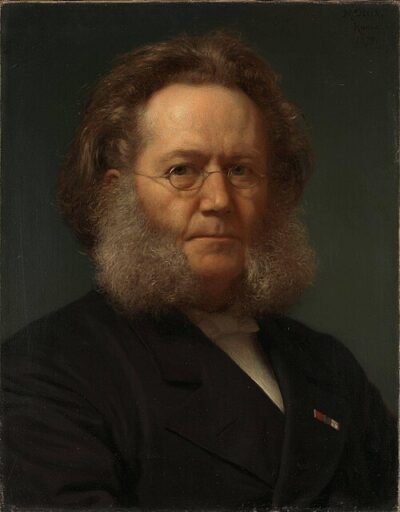
Hedda Gabler
Hedda Gabler is a play in four acts by Norwegian plawright Henrik Ibsen, published in 1890. It won the Laurence Olivier Awards.
- Released
- 1890
- Written by
- Henrik Ibsen
- Genre
- tragedy
All 6 facts, and where they come from
Facts
6 facts · 0 confirmed by two sources · 2 cited · 4 from one source
Where this comes from
Papalocal keeps its own record. It started from these sources; what each one said is kept here as it was copied, so a change on their side never changes this page by itself. Tap one to read its version.
What Wikidata says · copied November 17, 2026 · revision 2550046551
- Described as
- play in four acts by Norwegian plawright Henrik Ibsen, published in 1890
- What it is
- dramatic work · 1 reference
- Written by
- Henrik Ibsen
- Genre
- tragedy
- Released
- 1890 · 1 reference
- Language
- Norwegian
- Awards
- Laurence Olivier Awards
- Wikipedias with a page
- 32
Wikidata item Q176465 (wikidata.org/wiki/Q176465), public domain (CC0). Copied 2026-11-17.
What Wikipedia says · copied November 17, 2026 · revision 1381678455
Hedda Gabler (Norwegian pronunciation: [ˈhɛ̂dːɑ ˈɡɑ̀ːblər]) is a play written by Norwegian playwright Henrik Ibsen. The world premiere was staged on 31 January 1891 at the Residenztheater in Munich. Ibsen himself was in attendance, although he remained back-stage. Though initial reviews were negative, it has since been canonized as a masterpiece of literary realism, 19th-century theatre, and world drama in general.
Hedda Gabler dramatizes the experiences of the title character, Hedda, the daughter of a general, who is trapped in a marriage and a house that she does not want. Hedda is considered one of the great dramatic roles in theatre, and has been described as a female variation of Hamlet.
Hedda's married name is Hedda Tesman; Gabler is her maiden name. On the subject of the title, Ibsen wrote: "My intention in giving it this name was to indicate that Hedda as a personality is to be regarded rather as her father's daughter than her husband's wife."
From the Wikipedia article “Hedda Gabler” (en.wikipedia.org/wiki/Hedda_Gabler), by its contributors, under CC BY-SA 4.0 (creativecommons.org/licenses/by-sa/4.0/). Copied 2026-11-17; not changed.
Confirmed Two sources agree. Cited One source, and it names where it got it. One source One source, without a reference of its own. Sources disagree The sources disagree. We show the best-supported value and keep theirs below.
Picture: Wikimedia Commons: Hedda Gabler.jpg · See Commons file page