Helmholtz decomposition
Helmholtz decomposition is a theorem.
All 1 facts, and where they come from
Facts
1 facts · 0 confirmed by two sources · 0 cited · 1 from one source
Where this comes from
Papalocal keeps its own record. It started from these sources; what each one said is kept here as it was copied, so a change on their side never changes this page by itself. Tap one to read its version.
What Wikidata says · copied November 17, 2026 · revision 2515895722
- Described as
- theorem
- Other names
- Helmholtz's theorem
- What it is
- theorem
- Wikipedias with a page
- 18
Wikidata item Q1153588 (wikidata.org/wiki/Q1153588), public domain (CC0). Copied 2026-11-17.
What Wikipedia says · copied November 17, 2026 · revision 1375883124
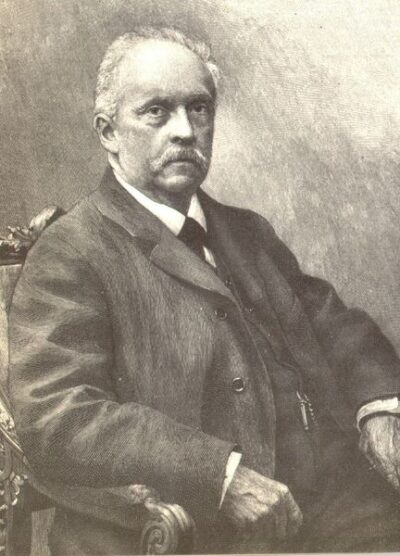
In physics and mathematics, the Helmholtz decomposition theorem or the fundamental theorem of vector calculus states that certain differentiable vector fields can be resolved into the sum of an irrotational (curl-free) vector field and a solenoidal (divergence-free) vector field. In physics, often only the decomposition of sufficiently smooth, rapidly decaying vector fields in three dimensions is discussed. It is named after Hermann von Helmholtz.
From the Wikipedia article “Helmholtz decomposition” (en.wikipedia.org/wiki/Helmholtz_decomposition), by its contributors, under CC BY-SA 4.0 (creativecommons.org/licenses/by-sa/4.0/). Copied 2026-11-17; not changed.
Confirmed Two sources agree. Cited One source, and it names where it got it. One source One source, without a reference of its own. Sources disagree The sources disagree. We show the best-supported value and keep theirs below.