Helmholtz equation
Helmholtz equation is an elliptic partial differential equation (∇²+𝑘²)𝑓=0.
All 3 facts, and where they come from
Facts
3 facts · 0 confirmed by two sources · 0 cited · 3 from one source
Where this comes from
Papalocal keeps its own record. It started from these sources; what each one said is kept here as it was copied, so a change on their side never changes this page by itself. Tap one to read its version.
What Wikidata says · copied November 17, 2026 · revision 2541695511
- Described as
- elliptic partial differential equation (∇²+𝑘²)𝑓=0
- Other names
- Gibbs–Helmholtz equation
- What it is
- elliptic differential equation; mathematical concept
- Named after
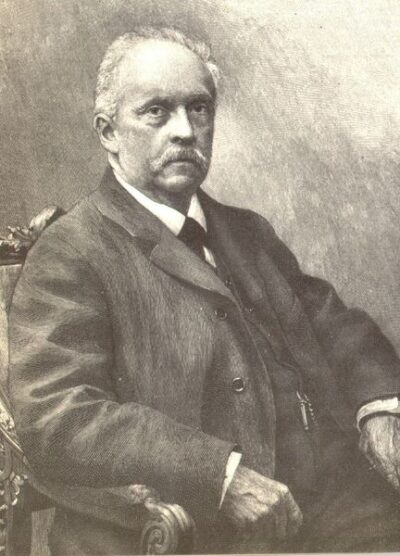
- Hermann von Helmholtz
- Wikipedias with a page
- 27
Wikidata item Q860615 (wikidata.org/wiki/Q860615), public domain (CC0). Copied 2026-11-17.
What Wikipedia says · copied November 17, 2026 · revision 1383681939
In mathematics, the Helmholtz equation is the eigenvalue problem for the Laplace operator. It corresponds to the elliptic partial differential equation:
∇2f=−k2f,
where ∇2 is the Laplace operator, –k2 is the eigenvalue, and f is the (eigen)function. When the equation is applied to waves, k is known as the wave number. The Helmholtz equation has a variety of applications in physics and other sciences, including the wave equation, the diffusion equation, and the Schrödinger equation for a free particle.
In optics, the Helmholtz equation is the wave equation for the electric field.
The equation is named after Hermann von Helmholtz, who studied it in 1860.
From the Wikipedia article “Helmholtz equation” (en.wikipedia.org/wiki/Helmholtz_equation), by its contributors, under CC BY-SA 4.0 (creativecommons.org/licenses/by-sa/4.0/). Copied 2026-11-17; not changed.
Confirmed Two sources agree. Cited One source, and it names where it got it. One source One source, without a reference of its own. Sources disagree The sources disagree. We show the best-supported value and keep theirs below.
Picture: Wikimedia Commons: Helmholtz solution.png · See Commons file page