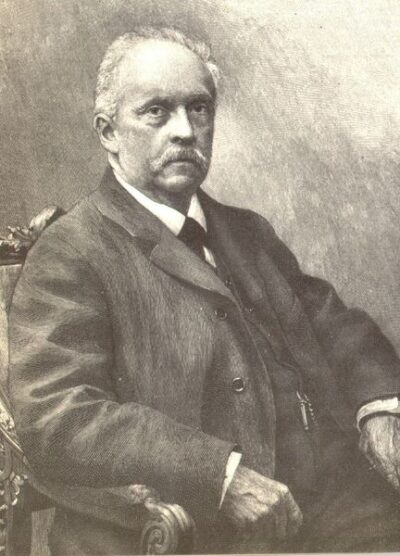
Helmholtz free energy
Helmholtz free energy is a thermodynamic potential.
All 1 facts, and where they come from
Facts
1 facts · 0 confirmed by two sources · 0 cited · 1 from one source
Where this comes from
Papalocal keeps its own record. It started from these sources; what each one said is kept here as it was copied, so a change on their side never changes this page by itself. Tap one to read its version.
What Wikidata says · copied November 17, 2026 · revision 2555522190
- Described as
- thermodynamic potential
- Other names
- Helmholtz energy, Helmholtz function, free energy
- Named after
- Hermann von Helmholtz
- Wikipedias with a page
- 39
Wikidata item Q865821 (wikidata.org/wiki/Q865821), public domain (CC0). Copied 2026-11-17.
What Wikipedia says · copied November 17, 2026 · revision 1384705023
In thermodynamics, the Helmholtz free energy (or Helmholtz energy) is a thermodynamic potential that measures the useful work obtainable from a closed thermodynamic system at a constant temperature (isothermal). The change in the Helmholtz energy during a process is equal to the maximum amount of work that the system can perform in a thermodynamic process in which temperature is held constant. At constant temperature, the Helmholtz free energy is minimized at equilibrium.
In contrast, the Gibbs free energy or free enthalpy is most commonly used as a measure of thermodynamic potential (especially in chemistry) when it is convenient for applications that occur at constant pressure. For example, in explosives research Helmholtz free energy is often used, since explosive reactions by their nature induce pressure changes. It is also frequently used to define fundamental equations of state of pure substances.
The concept of free energy was developed by Hermann von Helmholtz, a German physicist, and first presented in 1882 in a lecture called "On the thermodynamics of chemical processes". From the German word Arbeit (work), the International Union of Pure and Applied Chemistry (IUPAC) recommends the symbol A and the name Helmholtz energy. In physics, the symbol F is also used in reference to free energy or Helmholtz function.
From the Wikipedia article “Helmholtz free energy” (en.wikipedia.org/wiki/Helmholtz_free_energy), by its contributors, under CC BY-SA 4.0 (creativecommons.org/licenses/by-sa/4.0/). Copied 2026-11-17; not changed.
Confirmed Two sources agree. Cited One source, and it names where it got it. One source One source, without a reference of its own. Sources disagree The sources disagree. We show the best-supported value and keep theirs below.