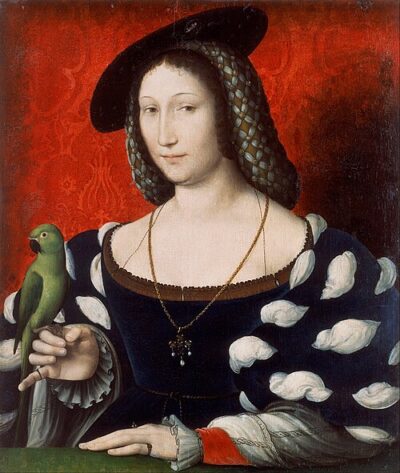
Heptaméron
Heptaméron is a prose by Margaret of Valois-Angoulême. It came out in 1558.
- Published
- 1558
- Written by
- Margaret of Valois-Angoulême
- Country of origin
- Kingdom of France
All 5 facts, and where they come from
Facts
5 facts · 0 confirmed by two sources · 0 cited · 5 from one source
Where this comes from
Papalocal keeps its own record. It started from these sources; what each one said is kept here as it was copied, so a change on their side never changes this page by itself. Tap one to read its version.
What Wikidata says · copied November 17, 2026 · revision 2553404649
- Described as
- prose by Margaret of Valois-Angoulême
- Other names
- Heptameron
- What it is
- literary work
- Written by
- Margaret of Valois-Angoulême
- Published
- 1558 · 1 reference
- Language
- Middle French
- Country of origin
- Kingdom of France
- Wikipedias with a page
- 28
Wikidata item Q1425915 (wikidata.org/wiki/Q1425915), public domain (CC0). Copied 2026-11-17.
What Wikipedia says · copied November 17, 2026 · revision 1383144499
The Heptaméron is a collection of 72 short stories written in French by Marguerite de Navarre (1492–1549), published posthumously in 1558. It has the form of a frame narrative and was inspired by The Decameron of Giovanni Boccaccio. It was originally intended to contain one hundred stories covering ten days like The Decameron, but at Marguerite’s death it was completed only as far as the second story of the eighth day.
Many of the stories deal with love, lust, infidelity, and other romantic and sexual matters. One was based on the life of Marguerite de La Rocque, a French noblewoman who was punished by being abandoned with her lover on an island off Quebec.
In 1973, the French director Claude Pierson made an adaptation of this work, entitled Oh, If Only My Monk Would Want (Ah! Si mon moine voulait...) as a French and Canadian coproduction, with a cast of both French and Quebecois actors.
From the Wikipedia article “Heptaméron” (en.wikipedia.org/wiki/Heptaméron), by its contributors, under CC BY-SA 4.0 (creativecommons.org/licenses/by-sa/4.0/). Copied 2026-11-17; not changed.
Confirmed Two sources agree. Cited One source, and it names where it got it. One source One source, without a reference of its own. Sources disagree The sources disagree. We show the best-supported value and keep theirs below.
Picture: Wikimedia Commons: Marguerite de Navarre - L'heptaméron des nouvelles, 1559 (Wikisource).pdf · See Commons file page