Hilbert's basis theorem
Hilbert's basis theorem is a theorem.
All 2 facts, and where they come from
Facts
2 facts · 0 confirmed by two sources · 0 cited · 2 from one source
Where this comes from
Papalocal keeps its own record. It started from these sources; what each one said is kept here as it was copied, so a change on their side never changes this page by itself. Tap one to read its version.
What Wikidata says · copied November 17, 2026 · revision 2547560154
- Described as
- theorem
- What it is
- theorem
- Named after
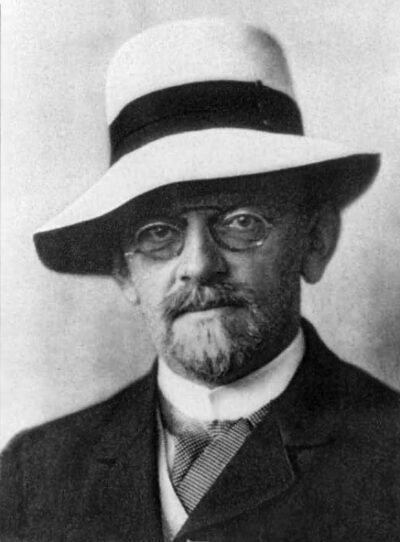
- David Hilbert
- Wikipedias with a page
- 18
Wikidata item Q656645 (wikidata.org/wiki/Q656645), public domain (CC0). Copied 2026-11-17.
What Wikipedia says · copied November 17, 2026 · revision 1384550348
In mathematics, Hilbert's basis theorem asserts that every ideal of a polynomial ring over a field has a finite generating set (a finite basis in Hilbert's terminology).
In modern algebra, rings whose ideals have this property are called Noetherian rings. Every field, and the ring of integers are Noetherian rings. So, the theorem can be generalized and restated as: every polynomial ring over a Noetherian ring is also Noetherian.
The theorem was stated and proved by David Hilbert in 1890 in his seminal article on invariant theory, where he solved several problems on invariants. In this article, he proved also two other fundamental theorems on polynomials, the Nullstellensatz (zero-locus theorem) and the syzygy theorem (theorem on relations). These three theorems were the starting point of the interpretation of algebraic geometry in terms of commutative algebra. In particular, the basis theorem implies that every algebraic set is the intersection of a finite number of hypersurfaces.
Another aspect of this article had a great impact on mathematics of the 20th century; this is the systematic use of non-constructive methods. For example, the basis theorem asserts that every ideal has a finite generator set, but the original proof does not provide any way to compute it for a specific ideal. This approach was so astonishing for mathematicians of that time that the first version of the article was rejected by Paul Gordan, the greatest specialist of invariants of that time, with the comment "This is not mathematics. This is theology." Later, he recognized "I have convinced myself that even theology has its merits."
From the Wikipedia article “Hilbert's basis theorem” (en.wikipedia.org/wiki/Hilbert's_basis_theorem), by its contributors, under CC BY-SA 4.0 (creativecommons.org/licenses/by-sa/4.0/). Copied 2026-11-17; not changed.
Confirmed Two sources agree. Cited One source, and it names where it got it. One source One source, without a reference of its own. Sources disagree The sources disagree. We show the best-supported value and keep theirs below.